
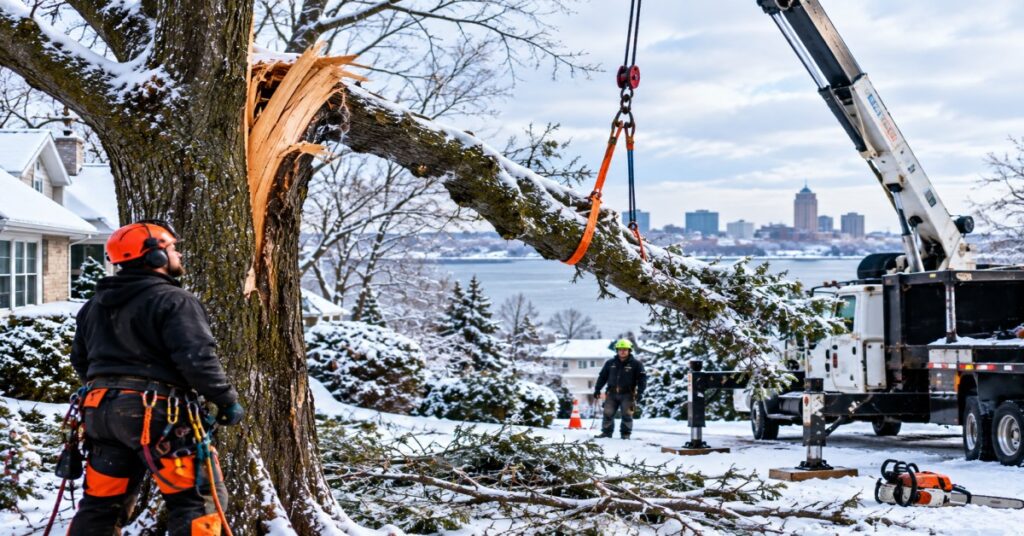
Dealing with winter tree damage in Buffalo NY is an unfortunate reality for homeowners throughout Western New York. Between high-velocity lake-effect gales tearing off Lake Erie, sudden freezing rain, and dense, water-logged snow, regional canopies endure some of the harshest winter stresses in the country. From North Buffalo and Amherst to Williamsville, Clarence, and Getzville, unaddressed limb weaknesses leave mature silver maples, oaks, and evergreens vulnerable to snapped branches, split trunks, or toppled root plates.
While completing proactive fall tree care in Buffalo NY establishes foundational root hydration and removes dying summer limbs, the arrival of freezing lake fronts creates extreme mechanical tension on canopies that requires dedicated winter vigilance. At Treeman NY, our certified arborists help property owners prevent storm structural failures and deliver safe, 24/7 emergency cleanup when severe weather strikes.
edicated winter vigilance. At Treeman NY, our certified arborists help property owners prevent storm structural failures and deliver safe, 24/7 emergency cleanup when severe weather strikes.
📋 Winter Tree Damage in Buffalo NY: Quick Takeaways
- The Primary Threats: Lake-effect snow loads (up to 30x normal branch weight with 0.5″ glaze ice) combined with 50+ mph lake gales cause clean branch snaps.
- What Never to Do: Never shake or hit ice-covered branches; frozen wood is brittle and violent snap-back causes sudden canopy failure or severe injury.
- Preservation Rule of Thumb: Trees retaining at least 60%–70% of a sound canopy and an intact trunk union can usually be saved through spring restorative pruning.
- Immediate Downed Wire Protocol: Always assume downed lines are live. Clear the zone and notify National Grid or NYSEG before calling an arborist.
Table of Contents
- 1. Why Buffalo Winters Cause Severe Tree Damage
- 2. Common Types of Winter Tree Damage in Buffalo NY
- 3. How to Prevent Winter Tree Damage in Buffalo NY Before Storms Strike
- 4. What to Do After a Winter Storm: Safe Damage Repair
- 5. Frequently Asked Questions (FAQs)
- 6. Protect Your Property with Buffalo’s Trusted Local Arborists
Has sudden winter tree damage left a heavy limb resting on your roof, driveway, or service drop? Don’t wait for the next lake-effect gust. Call our local 24/7 emergency response crew immediately for safe, rapid limb removal.
Call Treeman NY: (716) 466-5990Why Buffalo Winters Cause Severe Tree Damage
Winter storms in Erie County are unlike those anywhere else in the state. Understanding the specific physical forces driving winter tree damage in Buffalo NY helps homeowners recognize why their canopies are uniquely vulnerable:
- Dense, Water-Heavy Lake-Effect Snow: Early- and mid-winter storms absorb immense moisture over unfrozen lake waters, dumping slushy, dense precipitation. This heavy snow adheres to lateral branches rather than blowing clear, escalating the risk of severe winter tree damage in Buffalo NY through thousands of pounds of static load.
- Glaze Ice Accumulation: Freezing rain creates an unforgiving glaze. According to research on heavy ice loading on branch structures, an ice glaze of just 0.5 inches can increase a branch’s weight by up to thirty times, turning flexible lateral limbs into brittle hazards that fail under sudden mechanical stress.
- Sustained Lake-Effect Gales: Sustained wind gusts exceeding 50 to 60 mph frequently batter Western New York. Limbs stiffened by sub-freezing temperatures lose their natural flexural elasticity, snapping cleanly under high-velocity wind shear.
- Frost Heaving and Rapid Thaws: Repeated freeze-thaw cycles cause the ground to expand and contract. This loosens the anchoring root plates of shallow-rooted species like silver maples and white pines, accelerating whole-tree destabilization.
Common Types of Winter Tree Damage in Buffalo NY
Severe seasonal weather inflicts distinct forms of trauma on residential canopies. Identifying these primary types of winter tree damage in Buffalo NY allows you to triage hazards before complete failure occurs:
1. Branch Snapping and Limb Tear-Outs
When downward snow weight exceeds the wood’s tensile strength, branches snap. In the worst cases, tearing limbs rip away large sections of trunk bark, creating ragged wounds that expose the tree’s vascular system to wood-decaying fungi once spring temperatures rise.
2. Co-Dominant Stem and Trunk Splitting
Trees with two or more main stems growing close together in a narrow V-shape (included bark) are structurally compromised. Snow and ice packing between stems acts like a physical wedge, prying the trunks apart down the central seam.
3. Root Plate Heave and Whole-Tree Leaning
When high-velocity winds strike frozen crowns anchored in saturated, unfrozen subsoil, root plates shift. Ground heaving on the windward side indicates structural root anchor failure, creating an emergency tip hazard.
4. Bark Splitting and Frost Cracking
Rapid temperature swings—such as afternoon sunlight warming southwest-facing bark followed by an abrupt evening freeze—cause wood cells to expand and contract unevenly. This results in vertical trunk fissures known as frost cracks, a subtle yet destructive form of winter tree damage in Buffalo NY.
Before stepping beneath storm-loaded canopies to inspect cracked wood, review our field guide on dangerous tree inspection signs to spot structural trunk fractures and hazardous hangers safely from the ground.
How to Prevent Winter Tree Damage in Buffalo NY Before Storms Strike
While Western New York weather is unpredictable, systematic arborist care stops storm failures before they start. Implement these proactive defenses to avoid costly winter tree damage in Buffalo NY:
1. Structural Pruning and Wind-Sail Reduction
Canopies choked with dense, crossing, or competing branches act like massive sails during winter gales. Thinning out excess interior lateral growth reduces wind drag while eliminating weak branches before they become hazards. Understanding how often trees should be trimmed around a home keeps branch clearance safely away from rooflines, gutters, and overhead service lines.
2. Dynamic Cabling and Structural Bracing
For mature trees with co-dominant stems or heavy, overextended limbs, professional arborists install flexible dynamic cables high in the canopy. These systems allow natural movement during gentle breezes but arrest extreme oscillations during blizzard gales, preventing catastrophic stem splits.
3. Clear Dead and Compromised Wood Early
Brittle deadwood possesses zero flexibility. Removing dead, dying, or hollow branches during autumn ensures they won’t snap under the first heavy, wet snowfall of the season.
4. Follow Strict Dormant Pruning Protocols for Oaks
If pre-storm clearance requires trimming hardwood canopies, adhere strictly to regional oak wilt management guidelines. Live oak pruning must be restricted to dormant winter months to prevent devastating beetle-vectored fungal infections.
What to Do After a Winter Storm: Safe Damage Repair
If severe storms cause unexpected winter tree damage in Buffalo NY on your property, taking the right steps immediately ensures safety and preserves your landscape investment:
- Prioritize Safety First: Never approach a fallen limb entangled with utility wires. Always assume downed lines are energized and contact National Grid or NYSEG immediately before calling a tree contractor.
- Never Shake Ice-Laden Branches: While it is tempting to knock snow or ice off drooping limbs with a broom, frozen wood is exceptionally brittle. Shaking the branch can cause violent mechanical snap-back or total failure. Let ice melt naturally.
- Assess the Remaining Canopy: If a tree has lost less than 30% to 40% of its canopy and its main trunk is structurally sound, certified arborists can usually save it using restorative pruning in spring.
- Make Clean, Proper Pruning Cuts: Jagged, torn stubs trap standing moisture and encourage rot. Broken limbs should be pruned back cleanly to the branch bark ridge and collar using ANSI A300 standards, enabling natural compartmentalization.
- Call Certified Professionals for Heavy Rigging: Never attempt to remove storm-damaged limbs under tension or resting on structures. These store immense kinetic energy and require professional crane or rigging systems to dismantle safely without causing further property damage.
Frequently Asked Questions: Winter Tree Damage in Buffalo NY
Will homeowners insurance cover winter tree damage in Buffalo NY?
Standard homeowner insurance policies typically cover the cost of damage repair and debris removal if a tree or limb falls onto an insured structure like your house, garage, or fence due to heavy snow, ice, or wind storms. However, policies generally do not cover cleanup if a tree falls harmlessly in your open yard without hitting a structure, nor do they cover neglected dead trees that collapsed due to lack of routine maintenance.
Should I knock heavy snow or ice off my tree branches?
No, never shake or beat ice-laden branches with brooms or poles. Cold temperatures make wood fibers extremely brittle. Shaking the limb can trigger a violent snap-back that fractures the branch collar or causes heavy, frozen limbs to break off onto you. Always allow frozen canopies to thaw naturally, or contact a certified arborist if a branch poses immediate danger to property.
Is it safe to prune storm-damaged oak trees during winter in Buffalo?
Yes. In fact, winter is the safest period to prune broken or damaged oak branches because the sap-feeding beetles responsible for spreading lethal fungal spores are dormant. Emergency repairs during this window fully comply with regional oak wilt in Buffalo NY guidelines, preventing seasonal contamination while letting wounds seal naturally before spring.
How can I tell if a damaged tree can be saved after a winter storm?
A damaged tree can usually be preserved if it has lost less than 30% to 40% of its total canopy, the main trunk is free of deep vertical fractures or hollow seams, and the root flare remains securely anchored in the ground. Trees that have suffered catastrophic trunk splits or extensive bark tear-out generally require complete removal to eliminate long-term safety hazards.
Who is responsible if a neighbor’s tree falls into my Buffalo yard?
In Western New York, if a healthy tree falls onto your property due to an “act of God” (such as a severe lake-effect blizzard or ice storm), your own homeowner’s insurance policy handles the claim for damage on your land. However, if the neighbor’s tree was visibly dead, rotted, or previously documented as a hazardous defect and they failed to address it, they and their insurer can be held liable for negligence.
Protect Your Property from Winter Tree Damage in Buffalo NY
Whether you need preventative hazard pruning before the next blizzard or emergency limb removal right now, Treeman NY delivers dependable, licensed storm solutions across Buffalo, Amherst, Williamsville, and Clarence. Don’t wait for ice or heavy snow to compromise your home.
Treeman serves Buffalo, Amherst, Williamsville, Clarence, Getzville, and surrounding Western New York communities. 24/7 storm response, fully insured, and equipped with professional cranes and rigging to protect your property in any weather.