
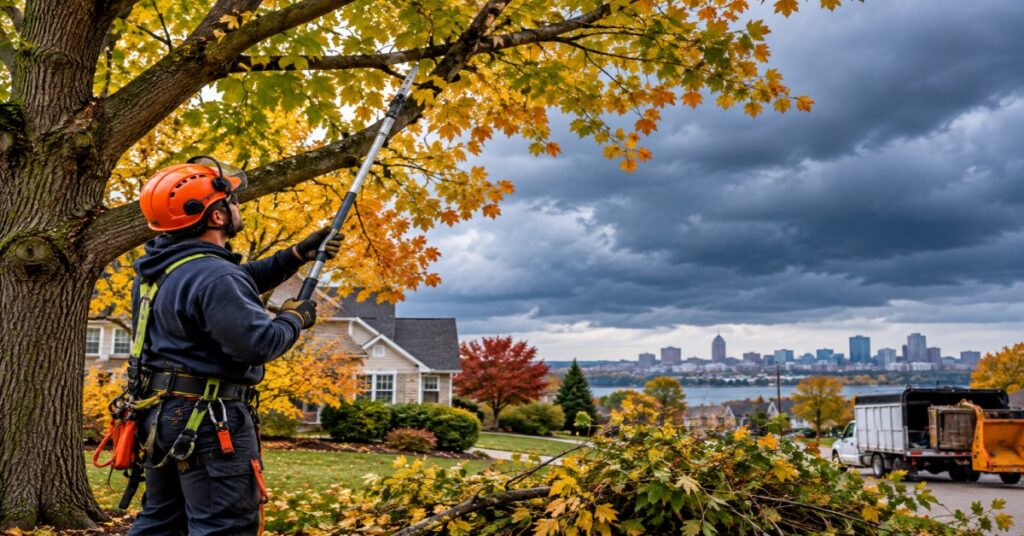
Investing in reliable fall tree care in Buffalo NY is the single most effective way to safeguard your property before Western New York’s notorious winter weather takes hold. As autumn arrives across North Buffalo, Amherst, Williamsville, Clarence, and Getzville, mature canopies face high-velocity lake-effect gale winds, sudden freezing rain, and early, moisture-heavy snowfalls. When wet snow clings to trees that still hold foliage or carry hidden structural defects, heavy limbs snap and crash onto roofs, driveways, and utility lines without warning.
Taking immediate preventative action protects your home, preserves mature shade trees, and eliminates costly structural failures. By combining pre-freeze deep root hydration, canopy deadwooding, cabling, and certified hazard evaluations, property owners can reinforce their landscape before freezing temperatures lock the soil solid. At Treeman NY, our ISA-trained arborists bring over 20 years of hands-on Western New York field experience to keep your trees resilient, structurally stable, and safe year-round.
- The Lake-Effect Factor: Early wet snow clings to autumn foliage, multiplying branch weight and increasing the risk of split trunks.
- Pruning Strategy: Triage dead and brittle branches immediately; reserve major live-wood thinning for late autumn or true winter dormancy.
- Deep Root Hydration: Soak soil 12 to 18 inches deep around the drip line before the hard freeze to prevent winter root desiccation.
- Structural Support: Multi-stem trees and tight V-shaped crotches benefit from dynamic cabling to withstand sustained winter wind loads.
Table of Contents
- 1. Why Fall Tree Care in Buffalo NY Is Critical Before Severe Storms
- 2. Essential Fall Tree Care Checklist for Western New York
- 3. Pruning Timelines: What to Cut Now and What to Wait On
- 4. Tree Species Vulnerabilities in Erie County
- 5. Spotting Dangerous Pre-Winter Structural Hazards
- 6. Why Professional Fall Maintenance Outperforms DIY Trimming
- 7. Frequently Asked Questions (FAQ)
Why Fall Tree Care in Buffalo NY Is Critical Before Severe Storms
Autumn weather across Western New York changes rapidly. Cold Canadian air masses passing over the warmer waters of Lake Erie frequently create severe early-season storm conditions. In October and November, Erie County regularly experiences powerful lake-effect squalls featuring wind gusts between 45 and 60 mph. When these gale-force winds hit while mature deciduous trees still retain autumn foliage, the physical strain placed on tree canopies is immense. Without scheduled fall tree care in Buffalo NY, these seasonal winds can quickly overwhelm weak branch unions.
A canopy holding onto wet leaves acts like a giant sail. High winds exert severe rotational force down through the trunk and across the structural root plate. If fall rains have saturated the surrounding soil, unstable root plates can heave directly out of the lawn. Consistent fall tree care in Buffalo NY reduces dense wind drag, clears hazardous deadwood leverage, and stops preventable storm damage before winter weather arrives.
Worried high autumn winds will snap weak limbs?
Call Treeman NY for a prompt on-site assessment:
Essential Fall Tree Care Checklist for Western New York
To ensure your landscape survives severe winter weather without structural failure, following professional fall tree care in Buffalo NY provides a clear, arborist-approved roadmap:
1. Hydrate the Root Zone Thoroughly Before Frost
Drought-stressed trees enter winter dormant periods depleted of resources. Before frozen topsoil locks moisture out, give your trees a deep watering around their drip line. Soaking the soil slowly allows water to reach feeder roots 12 to 18 inches below the surface. Incorporating deep root moisture into your regular fall tree care in Buffalo NY insulates cellular structures and protects against root desiccation caused by cold winter winds.
2. Apply Protective Organic Mulch Rings
Lay down a 2- to 4-inch layer of natural shredded bark or wood chips over the root zone. A proper mulch ring keeps soil temperatures even and conserves valuable moisture. Always maintain a 3-inch clearance around the base of the trunk. Avoid “mulch volcanoes,” which trap excess moisture against bark and invite rot and wood-boring pests.
3. Clear Dead and Compromised Branches
As deciduous trees drop their leaves, hidden deadwood and cracked limbs become easy to spot. Dead branches lose their elasticity in dropping temperatures, turning brittle and prone to snapping under heavy early snow loads. Wondering if your maples need trimming now? See our guide on how often trees should be trimmed around a home to balance proper clearance over your roofline with natural branch architecture before lake-effect winds arrive.
4. Install Supplemental Cabling and Bracing
Historic shade trees with co-dominant stems or tight V-shaped crotches face high failure rates under heavy ice accumulation. Installing high-tensile steel or synthetic dynamic cabling in the upper third of the canopy redistributes snow and wind loads safely without causing injury to tree tissue. This structural reinforcement is a core element of preventative fall tree care in Buffalo NY.
5. Relieve Soil Compaction
Buffalo’s native heavy clay soils compact quickly under foot traffic and lawn mowers throughout summer. Compacted earth deprives root systems of oxygen and slows water infiltration. Late autumn soil aeration and organic root zone conditioning give your root system the breathability it needs heading into spring.
Fall Tree Care Schedule for Western New York
| Timing | Maintenance Focus | Primary Storm Safety Benefit |
|---|---|---|
| September | Deep root watering & fresh mulch ring application | Prevents root desiccation and freeze damage during sub-zero cold snaps. |
| October | Hazardous deadwood removal & structural cabling checks | Removes brittle branches that snap under heavy, early lake-effect snow. |
| November | Dormant pruning & root flare clearance | Lowers canopy wind drag before sustained late-autumn gales arrive. |
Pruning Timelines: What to Cut Now and What to Wait On
Timing your trimming work correctly is crucial for long-term tree health. Trimming live branches during warm days in early autumn can stimulate a late flush of tender shoot growth that will freeze, die back, and invite decay during the first hard frost. When planning fall tree care in Buffalo NY, always reserve major live-branch thinning and structural canopy reduction for late autumn after deciduous trees shed their foliage and enter full dormancy.
Special care must be taken with sensitive hardwood species that face serious regional pathogens. Property owners should wait until late autumn or true winter dormancy to trim oaks to comply with oak wilt in Buffalo NY guidelines, ensuring sap-feeding nitidulid beetles and fungal spores cannot infect fresh, unsealed pruning cuts.
Tree Species Vulnerabilities in Erie County
Not all shade trees handle severe autumn weather the same way. Adapting your fall tree care in Buffalo NY to your specific tree varieties ensures the best protection:
- Silver Maples: Extremely common across Western New York, but notorious for soft, brittle wood and narrow crotches that split easily during severe windstorms.
- Norway Maples: Feature dense, heavy canopies that hold onto foliage late into autumn, acting as large sails during early lake-effect gales.
- Northern Red Oaks: Possess heavy hardwood canopy architecture that demands proper weight balancing and strict compliance with seasonal dormant pruning cycles.
- White Pines & Spruces: These evergreens feature dense needles that collect heavy, wet snow, creating extreme downward leverage that snaps horizontal lateral branches.
For research-backed diagnostic recommendations on regional plant pathology and native woody species maintenance, consult the agricultural resources provided by the Cornell Cooperative Extension.
Spotting Dangerous Pre-Winter Structural Hazards
Take a walk around your yard each fall to examine trunks, major branch unions, and root flares. Implementing systematic fall tree care in Buffalo NY means staying on high alert for these clear danger signs:
- Fungal Conks (Bracket Mushrooms): Fungi growing on the lower trunk or root flare are clear indicators of extensive internal heartwood rot.
- Ground Heaving or Cracking Soil: Mounded turf or exposed root tips on the windward side show that the root plate is failing.
- Co-dominant Stems with Included Bark: Stems that grow close together in a narrow V-shape create a weak seam prone to splitting down the center under heavy ice.
- Trunk Cavities and Decay Pockets: Hollow sections reduce load-bearing strength, increasing the risk of complete trunk failure.
If you spot leaning trunks or fungal brackets during your fall yard check, review our guide to dangerous tree inspection signs to determine whether cabling, crown reduction, or complete removal is required before winter storms strike.
Why Professional Fall Maintenance Outperforms DIY Trimming
Working on tall canopies in chilly, wet, or windy autumn conditions is inherently risky. Attempting DIY work from high ladders with chainsaws causes severe injuries every year. In addition, uneducated flush cuts or improper tearing damage the branch collar, leaving large open wounds that invite wood decay fungi.
Certified arborists use modern rigging lines, friction brakes, and bucket trucks to lower heavy limbs safely without damaging nearby structures. Scheduling professional fall tree care in Buffalo NY through Treeman NY guarantees all work meets ANSI A300 standards, protecting your property value and the health of your trees for years to come.
Frequently Asked Questions (FAQ)
When should I stop watering my trees in the fall in Buffalo?
Keep up with deep watering through October and early November until the first hard freeze locks the topsoil. Giving root systems ample hydration before the ground freezes prevents fatal root desiccation during cold, windy winter months.
Can trees be safely pruned during late fall in Western New York?
Yes. Light deadwooding can be completed anytime. However, structural pruning and live-branch crown thinning should wait until late autumn or true winter dormancy after the leaves have completely dropped.
How do I know if a tree needs cabling before winter storms?
Trees with co-dominant stems, narrow V-shaped crotches, or heavy leaning canopies over houses or driveways benefit greatly from dynamic cabling. An arborist can inspect structural integrity and install load-rated hardware to prevent major splits.
Protect Your Yard With Buffalo’s Trusted Tree Specialists
Don’t wait for an early lake-effect storm to reveal dangerous deadwood hanging above your home. Get ahead of severe weather with professional fall tree care in Buffalo NY from Treeman NY. Our experienced arborists deliver detailed pre-winter hazard evaluations, precision structural pruning, and 24/7 storm support across Western New York.
Office Address: 2791 N Forest Rd, Getzville, NY 14068
Service Area: Buffalo, Amherst, Williamsville, Clarence, Getzville, and Western New York.