
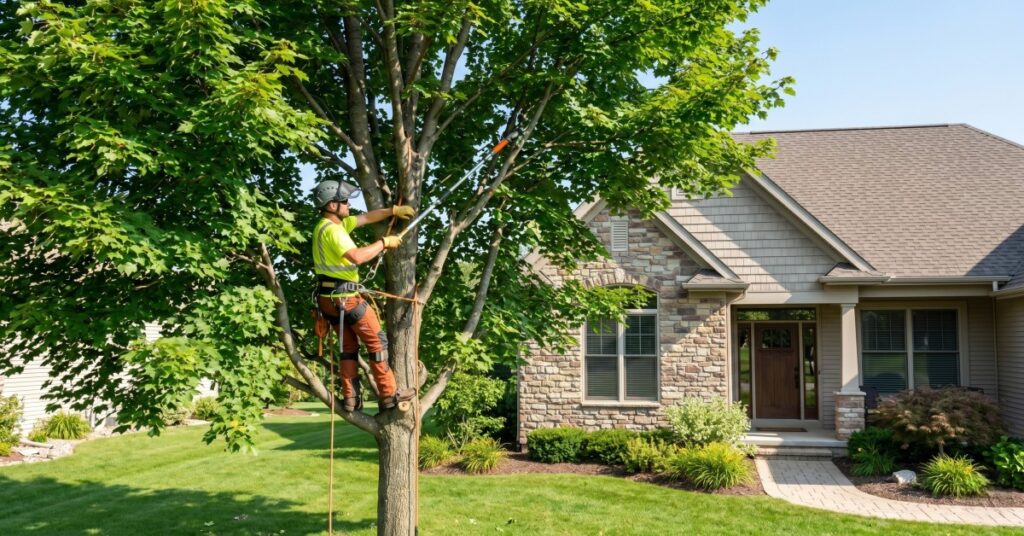
If you’ve ever looked up at the trees in your yard and wondered, how often should trees be trimmed — you’re not alone. It’s one of the most common questions Buffalo-area homeowners ask, and the honest answer is: it depends. Different tree species, growth rates, and yard conditions all play a role. But one thing is true across the board: regular trimming protects your home, your family, and your trees.
In Western New York, where lake-effect snow, heavy winds, and freeze-thaw cycles put real stress on trees, getting your trimming schedule right isn’t just a curb-appeal issue — it’s a safety issue. This guide breaks down exactly how often should trees be trimmed, what signs tell you it’s overdue, and when it’s time to call a professional.
Table of Contents
Why Regular Tree Trimming Matters
Trees are a long-term investment in your property. Left unmanaged, overgrown branches can scrape roofing materials, block gutters, crack driveways, or fall during storms — causing serious (and expensive) damage. Routine tree trimming helps trees grow stronger, stay healthier, and stay safely out of the way of your home’s structure and utility lines.
Beyond safety, regular trimming also improves tree health by removing dead, diseased, or crossing branches. This prevents disease from spreading, allows better sunlight and air circulation, and encourages natural growth patterns. Well-maintained trees can add 10–15% to your property’s value according to the Arbor Day Foundation — a real return on investment for any homeowner trying to figure out how often should trees be trimmed on their land.
How Often Should Trees Be Trimmed?
The most straightforward answer to how often should trees be trimmed varies by species and location. Here’s a practical breakdown for Buffalo-area homeowners:
| Tree Type | Recommended Trim Frequency | Buffalo Season Notes |
| Deciduous (Oak, Maple, etc.) | Every 3–5 years (mature) / annually (young) | Late winter / early spring |
| Fruit Trees | Annually | Late winter before bud break |
| Ornamental Trees | Every 2–3 years | After flowering season |
| Evergreens | Every 3–5 years or as needed | Early spring or late summer |
| Trees Near Roof / Power Lines | Annually or as needed | Before storm season (spring) |
Trees planted near your home, driveway, or utility lines may need more frequent attention regardless of species. If branches hang within 6 feet of your roofline, most arborists recommend an annual inspection at minimum to track exactly how often should trees be trimmed to maintain safety barriers.
Signs Your Trees Are Overdue for a Trim
Even with a schedule in place, trees sometimes grow faster than expected — especially during wet, humid summers like those Western New York often sees. Watch for these warning signs:
- Dead or hanging branches: Deadwood is unpredictable and can fall with no warning.
- Branches touching or scraping your roof: This can damage shingles and create an entry point for pests.
- Thick canopy blocking sunlight: Over-dense growth starves lower branches and stresses the tree.
- Crossing or rubbing limbs: These create wounds that invite disease and decay.
- Visible cracks, splits, or leaning: A sign of structural weakness that needs professional assessment immediately.
- Mushrooms or fungal growth at the base: A strong indicator of internal rot.
If you spot any of these issues, don’t wait for your next scheduled trim. Reach out to a certified arborist in Buffalo, NY to assess the situation before storm season arrives.
The Best Time to Trim Trees in Buffalo, NY
Timing matters almost as much as frequency when calculating how often should trees be trimmed. Buffalo’s climate creates specific windows where trimming is most effective — and least harmful to your trees.
Late Winter / Early Spring (Best Window)
This is the sweet spot for most tree species in Western New York. Trimming while trees are still dormant — before new buds appear — reduces stress on the tree and limits exposure to pests and disease. The International Society of Arboriculture (ISA) recommends dormant pruning for most deciduous trees because wounds close faster and insects like bark beetles are less active.
Summer (Secondary Window)
Summer trimming is useful for corrective work — removing problem branches, managing growth direction, or clearing sight lines. Avoid heavy pruning in hot, dry stretches as this adds stress to already-taxed trees.
Fall — Proceed With Caution
Most arborists advise against significant fall trimming. Cuts made in autumn heal slowly, and fresh wounds can invite fungal diseases that thrive in Western New York’s wet, cool conditions. Light deadwood removal is generally fine.
After Storm Damage — Any Time
Buffalo storms don’t follow a calendar. If a branch breaks or a tree is compromised by ice or high winds, emergency trimming is appropriate at any time of year. Safety always comes first — and that’s exactly the kind of tree trimming services in Buffalo, NY that Treemanny specializes in.
Should You Trim Trees Yourself or Hire a Pro?
Small decorative shrubs and young saplings can often be handled with basic pruning tools. But for most residential trees — especially anything taller than 10 feet, near your home, or showing signs of disease — professional care is the smarter and safer choice.
Our active field crews undergo extensive technical training to safely handle complex tree care. Here is what professional structural pruning looks like on a real local property:
- Advanced Rigging Systems: When managing heavy limbs overhanging a home in tight historic areas like Williamsville or older neighborhoods in Amherst, we don’t just drop branches. We use high-tensile friction brakes and lowering ropes to safely guide thousands of pounds of wood away from your roofline.
- Preserving the Branch Bark Ridge: An amateur cut often leaves a flush cut or a ragged stub. Our arborists make precise cuts just outside the branch bark ridge and collar. This preserves the tree’s natural defense zones, allowing the wound to compartmentalize (heal) properly and block wood-rotting fungi.
- Hazardous Utility Clearances: Working within 10 feet of secondary electrical service lines requires specialized training. We understand how to maintain safe approach distances to clear your service drops without risking catastrophic arc-flashes or line damage.
The cost of professional tree care in the Buffalo area is far less than the cost of a fallen limb through your roof. If you’re weighing the options, our guide on how much does tree trimming cost in Buffalo, NY breaks down what to expect.
Tree Trimming, Storms, and Homeowners Insurance in WNY
In Buffalo, waiting too long to trim isn’t just bad for the tree—it can be a massive insurance headache. Under most Western New York homeowners insurance policies, if a healthy tree falls due to a “sudden act of nature” (like a severe lake-effect ice storm), it’s typically covered.
However, if an unmaintained, clearly rotting, or dead limb crashes through your roof because you ignored how often should trees be trimmed, your insurance provider may deem it preventable neglect and deny your claim. Keeping a documented, routine trimming schedule with a professional service is your best line of defense against costly out-of-pocket structural repairs.
How Treemanny Helps Buffalo Homeowners Stay on Schedule
As a locally owned and operated tree trimming service, Treemanny has worked with hundreds of homeowners across Buffalo, Amherst, Williamsville, Getzville, Clarence, and the surrounding Western New York area. We understand the local tree species, the seasonal risks, and the specific structural challenges that come with properties in our region.
Our tree trimming and maintenance plans are designed to take the guesswork out of your annual property care. Whether you need a one-time trim before storm season or an ongoing schedule to keep mature oaks and maples in check, we’ll assess your property and build a plan that clarifies exactly how often should trees be trimmed for your budget.
Every job is performed by experienced, licensed, and insured crew members who treat your property with the same care they’d give their own. We also handle clean-up, so you’re not left with brush piles or sawdust after the job is done.
Ready to get your yard on a proper maintenance schedule? Call Treemanny today for a free estimate. We serve Buffalo and the greater Western New York area — and we’re ready when you are.
Get a Free Tree Trimming Estimate
Treemanny proudly serves Buffalo, Amherst, Williamsville, Getzville, Clarence, Lockport & all of Western New York. Secure your property before the next major storm cycle.
Frequently Asked Questions
How often should trees be trimmed around a house?
Most trees benefit from trimming every 3–5 years, but trees growing near your home, roof, or power lines should be inspected annually. Young trees may need yearly trimming to establish good structure, while mature, healthy trees can often go longer between sessions.
Is it OK to trim trees in the summer?
Yes, light trimming in summer is generally fine. It’s a good time for corrective cuts, crown thinning, and removing crossing branches. Avoid heavy structural pruning during heat waves or drought conditions, as this adds stress to the tree.
What happens if you don’t trim your trees?
Untrimmed trees can develop weak, crowded branch structures that are more likely to fail in storms. Dead branches become hazards. Overgrown canopies block light and air circulation, increasing disease risk. Over time, neglecting how often should trees be trimmed can directly threaten your home, fencing, or neighboring properties.
How do I know if my tree needs trimming?
Look for dead or hanging branches, limbs growing toward your roof or power lines, rubbing or crossing branches, thick canopy with no interior light, or any visible splits and cracks. If you’re unsure, schedule a professional inspection — a trained arborist can quickly identify whether trimming is needed.
Does tree trimming encourage growth?
Yes. Properly timed pruning removes competing branches and directs energy toward strong growth. It also opens the canopy to better sunlight and air circulation, which supports healthier leaf growth and longer tree lifespan.