
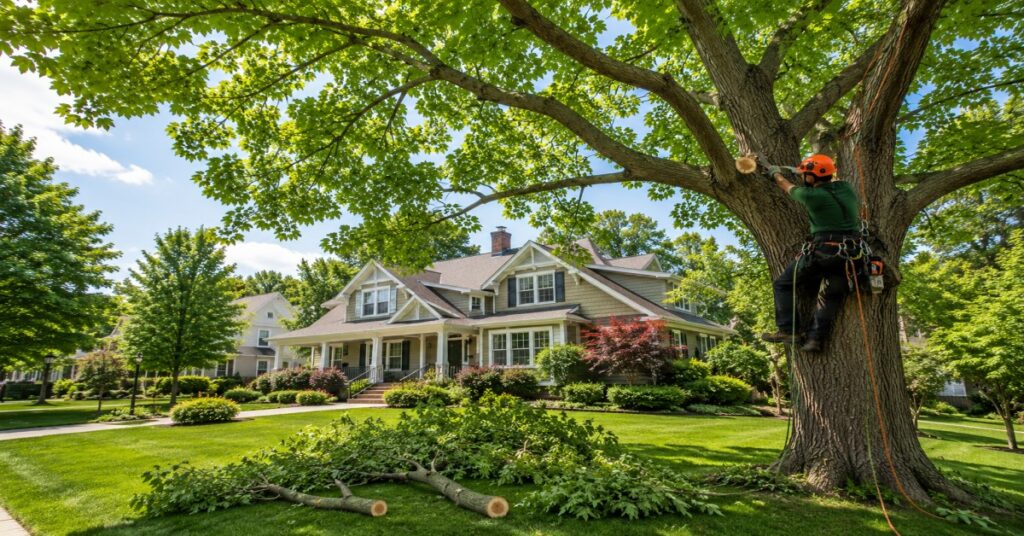
Maintaining mature shade trees and ornamental plantings in Western New York requires a proactive approach to property safety and arboricultural care, which is why following a comprehensive residential tree pruning checklist is essential. Specifically, severe lake-effect snowstorms, high spring winds, and sudden ice accumulation put immense stress on local canopy structures across Buffalo, Amherst, Williamsville, and Clarence.
Western New York weather brings unique hazards, from heavy lake-effect ice to high spring wind gusts. Whether you manage grand historic Oaks in Elmwood Village or delicate Japanese Maples in Snyder, keeping your canopy safe requires understanding how often trees should be trimmed around a home before severe WNY storms strike.
Because of these risks, using an expert residential tree pruning checklist helps homeowners identify structural vulnerabilities, remove hazardous limbs, and protect home foundations before seasonal weather takes its toll. Therefore, below is your complete, step-by-step residential tree pruning checklist to systematically evaluate your trees and preserve your outdoor landscape year-round.
🎧 Listen to the Podcast Version
Prefer to listen on the go? Tune in to our 24-minute episode for an in-depth breakdown of Buffalo’s complete residential tree pruning checklist.
Ready to Safely Prune Your Trees?
Don’t wait for the next Western New York storm to cause costly damage. Get expert guidance and honest pricing from Treemanny today.
Table of Contents
Phase 1: Pre-Pruning Visual Inspection & Safety Check
Before picking up hand shears or calling in a crew, walk your perimeter to inspect every mature tree from root flare to crown top. Furthermore, incorporating a residential tree pruning checklist early ensures no hazard goes unnoticed.
1. Identify Ground-Level Hazard Signs
First, examine the base of the tree for decay fungi (conks or mushrooms), deep trunk cracks, or heaving soil around the root plate. Consequently, root rot severely compromises structural integrity, especially during heavy snow loading.
2. Inspect the Main Canopy for Deadwood
Next, locate dead, dying, or decaying branches within the upper canopy. Because dead limbs lack bark and produce no foliage during spring leaf-out, they pose an immediate risk of dropping on roofs, driveways, or utility wires. Adding this assessment step to your residential tree pruning checklist ultimately protects your family and home from unpredicted limb drop.
3. Check Overhead Clearance Near Structures
Additionally, check trees growing within 10 feet of roofs, gutters, siding, or power lines, as these require priority attention. For instance, branches rubbing against shingles strip protective granules and trap moisture against home sidings.
4. Review Your Tool Safety Gear
Finally, if you are performing minor ground-level trimming, ensure you possess personal protective equipment (PPE): hard hat, eye protection, heavy leather gloves, and sharp, disinfected bypass pruners.
Pro Tip: Never attempt DIY branch cutting on limbs within 10 feet of overhead electrical lines or branches larger than 3 inches in diameter. Reviewing your residential tree pruning checklist alongside professional expertise ensures high-risk canopy management is handled safely with certified bucket trucks and rigging gear. In addition, you can explore our full tree trimming and maintenance plans in Buffalo, NY for comprehensive landscape solutions.
Phase 2: Essential Pruning Steps & Limb Selection
Following a standardized residential tree pruning checklist prevents aggressive flush cuts or harmful topping that starves trees of vital energy reserves.
Canopy Pruning Priority Standard
Dead / Broken Branches
Immediate hazardous wood & decay removal.
Crossing / Rubbing Limbs
Internal structure & friction prevention.
Water Sprouts / Suckers
Energy drain clearance at root/base.
5. Remove the “3 Ds” First (Dead, Damaged, Diseased)
To begin, start every pruning session by cutting out branches that show signs of decay, fungal infection, or storm splintering. While many homeowners confuse shaping foliage with biological health, understanding the difference between tree pruning vs tree trimming ensures you remove compromised wood to stop decay vectors from spreading to sound heartwood.
6. Eliminate Crossing and Rubbing Branches
In addition, when two branches rub against each other, friction strips away protective bark, leaving open wounds. Therefore, cut out the weaker or inward-growing branch as recommended on your residential tree pruning checklist.
7. Prune Out Competing Codominant Leaders
Furthermore, trees with double stems (V-shaped crotches) are prone to splitting down the center under heavy ice loads. Because of this structural weakness, prune secondary stems early in the tree’s lifespan to establish one dominant central leader.
8. Clear Out Water Sprouts and Basal Suckers
Similarly, fast-growing vertical shoots (water sprouts) along major branches and suckers emerging from root bases sap nutrients from the main trunk without contributing to healthy growth.
9. Follow the “Rule of 25%”
Moreover, never remove more than 20% to 25% of a living tree canopy in a single growing season. Using a residential tree pruning checklist ensures you avoid over-pruning, which stresses the tree and forces weak sprout growth susceptible to insect infestation.
Phase 3: Seasonal Timing for Western New York Species
Understanding local climate windows is crucial because it helps achieve healthy seasonal recovery and vibrant foliage growth across WNY properties.
| Season | Best Suited Pruning Tasks | Local WNY Considerations |
|---|---|---|
| Late Winter / Early Spring (Dormant) | Major structural pruning, deadwood removal, crown thinning | Ideal for Maple, Oak, and Birch while trees are dormant before sap flows. |
| Late Spring / Summer | Light cosmetic shaping, removal of summer storm damage | Excellent for spotting hidden deadwood within full summer foliage. |
| Fall (Autumn) | Avoid Major Pruning | Fungal spores are high; cuts heal slowly before frost hits. |
10. Schedule Major Cuts During Winter Dormancy
Overall, pruning between December and March minimizes sap loss and protects open cuts from seasonal insects. Executing your residential tree pruning checklist during dormancy also provides clear line-of-sight visibility into the internal branch structure.
11. Timing Adjustments for Flowering Trees
However, make timing adjustments for spring-flowering trees (such as Dogwood, Crabapple, and Serviceberry) by pruning them immediately after their spring bloom finishes to avoid cutting off next year’s pre-formed flower buds.
12. Oak Wilt Protection Window
In addition, in accordance with regional forestry guidance, avoid pruning Oak trees between April and July. This is because fresh pruning wounds attract nitidulid beetles that transmit dangerous Oak Wilt fungus. For full seasonal timing standards, consult Cornell University’s Urban Forestry Guidelines.
Phase 4: Post-Pruning Cleanup & Tree Health Evaluation
Completing a residential tree pruning checklist properly requires careful post-care to keep your lawn clean and your property protected.
Post-Pruning Checklist Verification
- ✓ Branch Collars Intact (No Flush Cuts Made)
- ✓ All Debris Raked & Chipped Off-Site
- ✓ Soil Hydration & Organic Mulch Applied Correctly
- ✓ Annual Canopy Growth Monitored for Stress Signals
13. Maintain the Branch Bark Collar
When making final cuts, cut just outside the branch collar (the swollen area where the limb meets the main stem). Specifically, avoid flush cuts, which destroy the tree’s natural callus-forming ability.
14. Skip Wound Dressings and Tree Paints
Furthermore, modern arboriculture proves that sealers and wound paints trap moisture inside cuts, creating breeding grounds for rot and wood-decaying fungi. Therefore, allow cuts to air-dry and compartmentalize naturally.
15. Clean and Sanitize Equipment
In addition, wipe blades with 70% isopropyl alcohol or diluted bleach solutions between trees. Sanitizing effectively prevents spreading hidden blights or fire blight bacteria across your residential landscape.
16. Implement Proper Mulching & Hydration
Next, apply a 2- to 3-inch layer of organic wood mulch around the root zone, keeping mulch 4 inches away from the trunk flare. Deep watering after pruning helps trees recover efficiently. If your pruning project involves clearing out severely decayed trees or removing old stumps that attract pests, combining your routine maintenance with immediate stump grinding after tree removal keeps your lawn level, safe, and pest-free.
17. Track Yearly Growth Trends
Finally, keep a seasonal record of your trees’ health. If you notice persistent leaf yellowing, rapid dieback, or heavy fungal growth, review your routine seasonal tree trimming in Buffalo, NY with a local specialist. Ultimately, following an annual residential tree pruning checklist keeps your property safe year after year.
When to Call a Licensed & Insured Buffalo Arborist
While basic hand-pruning of low shrubs and small limbs can be done by experienced homeowners, large shade tree care requires specialized aerial equipment, rigging systems, and expert safety protocols.
Immediate Callout Triggers:
- Branches Near Power Lines: High-voltage hazards requiring specialized utility clearance.
- Limbs Over 3″ In Diameter: Heavy canopy branches requiring certified aerial rigging.
- Dead or Leaning Hazardous Trees: Severe structural instability or compromised root flare.
Calling Treeman NY ensures your trees receive precision care from certified professionals who understand Buffalo’s unique soil conditions, severe weather patterns, and suburban municipal codes:
- Heavy Canopy Thinning: Safe removal of thick limbs hanging directly over houses, garages, or neighbor property lines.
- Emergency Storm Cleanup: 24/7 response for storm-damaged, hazardous, or fallen limbs following heavy snowfall or high wind events.
- Full-Service Property Management: Complete tree removal, stump grinding, and tailored health maintenance plans.
Treemanny serves Getzville, Amherst, Williamsville, Clarence, Lockport, East Amherst, and surrounding Buffalo, NY communities. Licensed and insured.
Frequently Asked Questions
What is the primary focus of a residential tree pruning checklist?
A residential tree pruning checklist helps property owners systematically evaluate tree health, identify dangerous limbs, choose correct pruning windows, and prevent property damage during severe weather.
How often should residential trees in Buffalo be pruned?
Most mature hardwood trees benefit from professional structural pruning every 3 to 5 years, while younger trees or fast-growing ornamental varieties may require light annual maintenance. Referencing your residential tree pruning checklist ensures you stay on schedule.
Is winter a good time for tree pruning in Western New York?
Yes. Late winter dormancy is one of the best times for pruning in Buffalo because trees suffer less stress, sap flow is low, fungal activity is dormant, and the absence of leaves allows clear visibility of canopy structure.
Should I trim branches hanging over my neighbor’s property?
In New York State, property owners generally have the legal right to trim branch overhangs up to their property boundary line, provided the cuts do not harm or kill the tree. However, consulting a professional arborist ensures clean, safe cuts.