
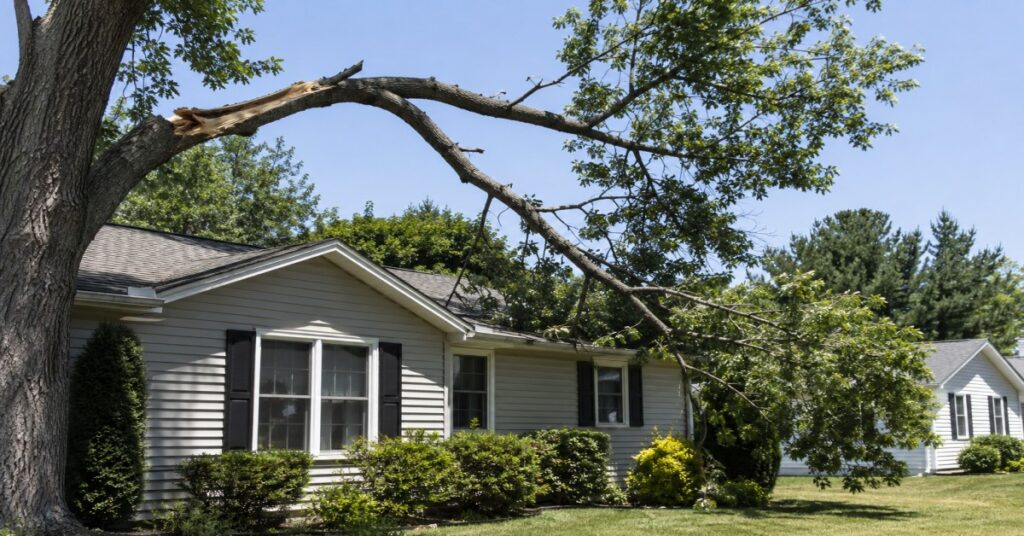
Living in Western New York means dealing with beautiful changing seasons. However, it also means bracing your property for severe weather. Our local trees take an absolute beating throughout the year. They face high-wind squalls off Lake Erie, heavy summer thunderstorms, and punishing lake-effect winter blizzards.
When severe weather hits the Buffalo area, proactive property maintenance makes all the difference. It protects your home from thousands of dollars in property damage. Specifically, scheduling professional tree trimming before storm season is your primary defense against falling limbs and structural failures.
Treeman employs ISA-certified arborists serving Amherst, Williamsville, Orchard Park, and Clarence. Our team witnesses the devastating impacts of storm-damaged branches firsthand. Weakened tree structures act like sails in high winds. They catch the force of the gale until the wood shears apart. You can protect your roof and preserve your landscaping by investing in calculated, strategic maintenance before the sky turns gray. Proactive care secures your family’s safety
Table of Contents
- Why Tree Trimming Before Storm Season Saves Money and Lives
- Critical Signs Your Trees Need Trimming Before Storm Season
- The Buffalo Local Advantage: Why WNY Weather is Different
- How Treeman Protects Your Home: Our Process
- Frequently Asked Questions (FAQ)
- Secure Your Property Before the Next Big Storm: Call Treeman Today
Why Tree Trimming Before Storm Season Saves Money and Lives
Many homeowners operate on a reactive mindset. They only call an emergency tree removal checklist Buffalo team after a tree crushes their garage or takes out a power line. Our teams stand ready 24/7 for urgent situations. However, preventative care is always safer and more cost-effective.
When you prioritize tree trimming before storm season, you actively reduce the wind resistance of the canopy. The tree care industry calls this process “canopy thinning” or “crown reduction”. Dense, overgrown canopies trap heavy winds rather than letting them pass through harmlessly.
This aerodynamic drag places massive stress on the trunk and root system. A clear plan for tree trimming before storm season allows the wind to flow smoothly through the branches. This steps down the likelihood of a total uprooting.
Furthermore, clearing out deadwood, diseased limbs, and structurally flawed branches eliminates potential high-speed projectiles. Committing to thorough tree trimming before storm season ensures that you remove these weak links. A single dead branch hanging fifty feet over your home can transform into a destructive missile during a 60 mph windstorm. It can easily penetrate shingles or shatter windows.
Critical Signs Your Trees Need Trimming Before Storm Season
How do you know if your property is vulnerable? Walking your yard and inspecting your trees from multiple angles is the first step. Look for these critical warning signs that mean you must arrange for professional tree trimming before storm season arrives:
Large Deadwood and Brittle Hanging Branches
Look closely at your trees during the peak of summer. Branches without leaves, or wood that looks brittle, dry, and barkless, indicate deadwood. These sections lack structural integrity and flexibility. The next heavy gust of wind will easily snap them loose. This makes safety inspections an essential part of your tree trimming before storm season.
Overhanging Canopies Near Your Roof or Power Lines
Trees growing too close to your house present an immediate risk. Limbs that scrape against your siding or hover over your roofline can easily snap. Heavy storm winds or winter ice accumulation cause these sudden breaks. If branches reach within 10 feet of your house, executing proactive tree trimming before storm season mitigates liabilities.
V-Shaped “Co-Dominant” Stems
Trees with two main trunks growing upward in a tight “V” shape are notoriously unstable. As the tree grows, bark gets trapped between the stems, creating a weak structural fault line. High winds apply opposing forces to these trunks, frequently splitting the tree down the middle. Timely tree trimming before storm season applies strategic crown reduction to alleviate this pressure before a split occurs.
Excessive Leaf and Canopy Density
Thick, overgrown canopies act like giant umbrellas. If your trees are dense, sunlight cannot penetrate to the interior branches or the grass below. Wind cannot pass through either. Heavy winds catch these dense canopies and increase the risk of the whole tree toppling when rain saturates the soil. This makes thinning an essential component of tree trimming before storm season.
Noticeable Leaning or Signs of Structural Decay
While some trees naturally grow at a slight angle, a sudden or progressive lean is a red flag. Cracked or lifted soil on the side opposite the lean shows that the root system is failing. Deep vertical cracks or shelf-like mushrooms point to internal wood rot. Weight reduction through tree trimming before storm season can prevent an imminent fall during a fast-approaching storm.
The Buffalo Local Advantage: Why WNY Weather Requires Specialized Care
Western New York weather is uniquely harsh on local ecosystems. Buffalo properties must withstand volatile climates. Homeowners here deal with more than standard summer thunderstorms. Investing in an expert buffalo weather tree service ensures your home stays safe against heavy lake-effect snow loads. This snow applies thousands of pounds of downward pressure to green or dormant branches.
Because of this, timing is highly critical. Consult an expert to determine the best time to trim trees Buffalo NY. This ensures your species-specific pruning occurs perfectly.
For example, trimming certain hardwoods right before winter prevents rapid structural splits during freeze-thaw cycles. Similarly, managing oak or maple canopies in late summer prepares them cleanly for autumn windstorms. Our local crews understand exactly how Western New York soils saturate and how wind patterns roll off the lakes. This local expertise allows us to accurately predict when tree trimming before storm season is absolutely vital to protect your home.
How Treeman Protects Your Home: Our Professional Process
When you hire Treeman for your property’s safety needs, you get a systematic approach backed by deep local authority and experience:
- Comprehensive Hazard Assessment: We evaluate your entire landscape to identify hidden risks, such as internal trunk decay or compromised root structures.
- Precision Canopy Thinning: Using advanced safety rigging and bucket trucks, we carefully thin out the interior branches. This reduces wind resistance without affecting the tree’s biological health.
- Deadwood Removal: We systematically eliminate all dead, dying, and diseased limbs to eliminate falling hazards.
- Structural Balancing: If a tree grows unevenly toward your property, we selectively prune the canopy. This balances weight distribution and makes the tree stable during high-wind events.
- Meticulous Property Cleanup: We treat your yard like our own. All limbs are chipped and hauled away. Then, our crew rakes the entire work area clean.
For complete year-round protection, we recommend checking out our comprehensive tree trimming and maintenance plans Buffalo NY. Routine checkups automatically shield your landscape ahead of volatile weather shifts. Taking action now avoids emergency pricing later.
Frequently Asked Questions
When should you prune trees before a storm?
The ideal window to prune trees is during early spring or late summer. Completing this work before severe seasonal storm patterns begin allows wounds to heal cleanly. It also prevents exposing the tree to extreme seasonal stress or inviting opportunistic pests right as the weather turns volatile.
How does trimming trees reduce storm damage?
Trimming lowers structural wind resistance by opening up the canopy. It removes deadwood and overextended, weak branches that act like sails in heavy wind. This directly allows high-speed winds to blow freely through the canopy rather than catching it and causing severe limb fractures or total root failure.
Is tree trimming the same as tree pruning?
While used interchangeably by homeowners, they serve different goals. Tree trimming is primarily focused on aesthetics and immediate property safety (such as cutting branches away from a roofline before a storm). Tree pruning focuses strictly on the long-term biological health, structural integrity, and disease management of the tree species.
Can I trim large tree branches over my house myself?
No. Trimming large limbs hanging over permanent structures is incredibly dangerous. It requires advanced rigging techniques, commercial bucket trucks, and specialized insurance. Attempting a DIY cut on a heavy branch can result in life-threatening injuries or severe property damage. Always hire an expert team to evaluate and execute the work safely.
Secure Your Property Before the Next Big Storm: Call Treeman Today!
Don’t wait until you hear branches snapping over your roof in the middle of a midnight storm. Proactive tree care protects your family and saves your home from thousands of dollars in structural damage. It also preserves the long-term health of your beautiful mature trees. Securing professional tree trimming before storm season is the single most responsible step you can take for your property this year.
Treeman is fully licensed, comprehensively insured, and deeply trusted across the entire Western New York region. We align our work with standard safety frameworks established by global groups like the International Society of Arboriculture (ISA). Our local crews are standing by to provide expert safety evaluations and professional trimming services tailored to our demanding local climate.
Protect Your Home and Loved Ones Today!
Are you browsing on your phone? Click our number below to call our dispatch team immediately, or trace our service maps via our Google Business Profile to request an instant on-site tree safety assessment! Our local crews are already in your neighborhood.
Treemanny is licensed, insured, locally operated, and committed to leaving your property cleaner than we found it — on every job, every time.
Treemanny serves Getzville, Amherst, Williamsville, Clarence, Lockport, East Amherst, and surrounding Buffalo, NY communities. Licensed and insured.