
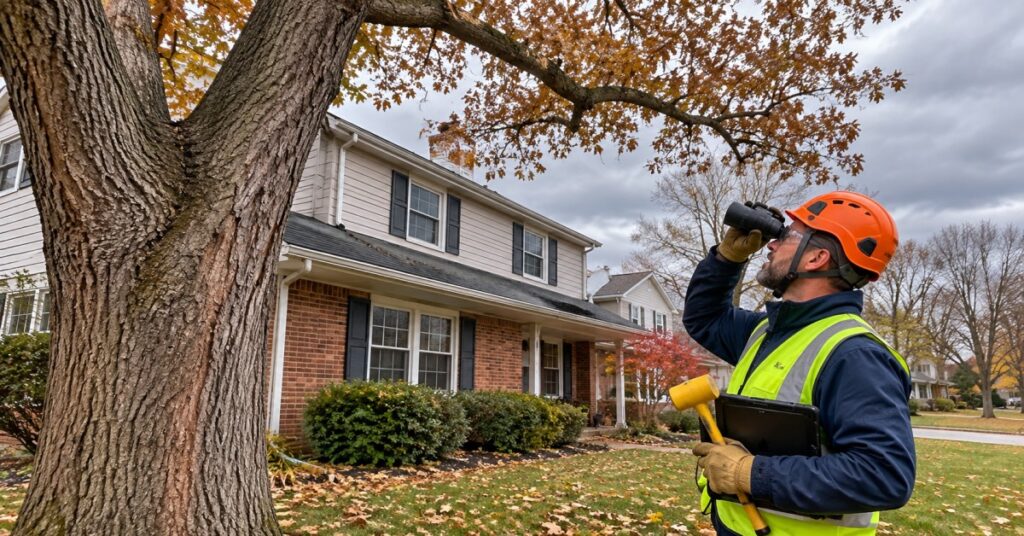
Mature oak, silver maple, and white pine trees add shade and curb appeal across Western New York yards. However, heavy branches overhanging your home create serious structural danger during Lake Erie wind gales and wet lake-effect snowstorms. From tree-lined streets in Amherst, Williamsville, and Clarence to suburban lots in Tonawanda, Cheektowaga, and Getzville, booking a professional tree risk assessment buffalo ny helps homeowners uncover hidden defects before a limb crashes through roof decking.
Why Visual Yard Checks Miss Hidden Roof Hazards
Green summer leaves often hide severe internal trunk rot, hollow cavities, or root instability beneath saturated clay soil. A certified tree risk assessment buffalo ny replaces guesswork with standardized diagnostic testing. Rather than cutting down a healthy shade tree unnecessarily or ignoring a silent hazard, you get science-backed answers. You learn whether targeted crown thinning, steel cabling, or controlled removal is the safest way to protect your roof.
📋 Table of Contents: Tree Risk Assessment Buffalo NY Guide
- 1. What Happens During an ISA TRAQ Tree Risk Assessment Buffalo NY?
- 2. 5 Roof-Threatening Defects Certified Arborists Uncover Early
- 3. How a Tree Risk Assessment Saves Money Over Emergency Roof Repairs
- 4. When Buffalo Homeowners Should Schedule a Professional Tree Inspection
- 5. Frequently Asked Questions About Tree Risk Assessments in Buffalo NY
What Happens During an ISA TRAQ Tree Risk Assessment Buffalo NY?
Reputable local arborists follow the three-tier diagnostic framework established by the International Society of Arboriculture Tree Risk Assessment Qualification (ISA TRAQ). Every tree risk assessment buffalo ny begins by identifying high-value targets within striking distance. Evaluators check your main roofline, attached garage, porch, and overhead electrical service drop.
Comparing Level 1, Level 2, and Level 3 Diagnostic Inspections
Depending on canopy size and visible warning symptoms, an evaluator selects the right inspection depth:
| ISA TRAQ Level | Diagnostic Methods & Tools Used | Best Residential Use Case |
|---|---|---|
| Level 1: Limited Visual | Walk-by visual scan from set vantage points checking obvious deadwood, major leans, or hung limbs. | Multi-tree yards, HOA perimeters, or rapid post-storm triage across large lots. |
| Level 2: Basic 360° Walkaround | Full 360-degree ground walk, binoculars for upper forks, mallet sounding for hollow trunks, and root-collar probing. | Standard residential tree risk assessment buffalo ny for mature trees overhanging roofs. |
| Level 3: Advanced Testing | Aerial bucket inspection, resistance micro-drilling (Resistograph), or sonic tomography to measure internal decay thickness. | Valuable heritage oaks or maples with basal fungi near a house where removal is borderline. |
This structured methodology connects directly to our broader storm damage tree risk Buffalo, NY safety framework.
5 Roof-Threatening Defects Certified Arborists Uncover Early
Many residential roof collapses happen because internal structural flaws remain invisible from a kitchen window. During a thorough tree risk assessment buffalo ny, specialists look closely for five high-risk defects that threaten shingles and rafters:
Internal Trunk Decay, Root Heaving, and Overextended Limbs
- 1. Hollow Heartwood Behind Healthy Bark: Decay fungi digest structural wood inside the trunk while outer sapwood stays green. Mallet sounding and resistance drilling measure how much sound shell remains to support canopy weight during 60 mph Lake Erie gusts.
- 2. Tight Codominant V-Crotches with Included Bark: Twin trunks growing upward at a sharp V-angle trap bark inside the seam. Under heavy wet snow, these weak unions split apart and drop massive limbs directly onto rooflines.
- 3. Subsurface Root-Plate Lifting in Wet Clay Soil: Erie County glacial clay loses friction during prolonged autumn rain or spring thaw. Arborists inspect the windward root flare for cracked soil mounds that signal a leaning tree is pivoting toward your home.
- 4. Overextended Lateral Limbs & Gutter Abrasion: Heavy horizontal limbs reaching over second-story roofs act like long levers in high winds. Wind-whipped branches also scrape protective granules off architectural shingles and tear loose fascia boards.
- 5. Brittle Pest-Killed Ash & Beech Canopies: Trees damaged by emerald ash borer or foliar disease dry out rapidly and lose branch flexibility. Review our checklist of dangerous tree inspection signs Buffalo homeowners must know to spot early crown dieback.
🏠 Worried About a Large Tree Hanging Over Your Roof?
Get peace of mind before the next Western New York windstorm or heavy snow alert. Treeman NY provides certified on-site tree risk evaluations, structural pruning, cabling, and low-impact crane removal across Buffalo, Amherst, Clarence, Williamsville, Tonawanda, and Getzville.
How a Tree Risk Assessment Saves Money Over Emergency Roof Repairs
Scheduling a proactive tree risk assessment buffalo ny costs a small fraction of emergency crane extraction and roof truss reconstruction. Even better, an accurate diagnostic evaluation frequently saves healthy trees that homeowners assumed needed total removal.
Targeted Mitigation Options vs. Controlled Removal
When a Level 2 or Level 3 evaluation shows moderate structural risk, certified arborists can often stabilize the tree safely:
- End-Weight Reduction & Roof Clearance Pruning: Shortening overextended lateral branches by 15% to 20% reduces wind leverage and restores safe roof clearance. Learn more on our tree trimming Buffalo NY service page.
- Dynamic Crown Cabling & Brace Rods: High-strength steel cables installed high in the canopy limit sway between codominant stems. This prevents V-crotch splits during winter gales.
- Planned Sectional or Crane-Assisted Removal: If internal decay exceeds safe structural thresholds, scheduling planned tree removal Buffalo NY during dry weather avoids expensive after-hours emergency surcharges.
When Buffalo Homeowners Should Schedule a Professional Tree Inspection
Timing your tree risk assessment buffalo ny strategically maximizes diagnostic accuracy and protects your property year-round. Follow the seasonal forest health advisories from the New York State Department of Environmental Conservation forest and tree care guidelines and book an inspection in four key situations:
- Late Autumn Before Lake-Effect Snow & Winter Gales: Leaf drop exposes upper branch forks, frost cracks, and bark defects clearly. Arborists spot hidden weaknesses before winter storms arrive.
- Immediately After Severe Windstorms or Saturated Spring Rains: Even if no branches fell, high gusts can loosen root plates in wet clay. Upper unions may also crack and fail during the next moderate storm.
- Before Buying a Home or Replacing a Roof: Evaluating mature trees prior to closing prevents unexpected removal bills. It also protects your new architectural shingle roof warranty.
- After Nearby Driveway, Pool, or Utility Trenching: Excavation within a tree’s drip line severs stabilizing anchor roots, requiring a prompt stability evaluation.
For a complete seasonal checklist covering soil saturation, wind physics, and post-storm safety rules, visit our master storm damage tree risk buffalo ny homeowner safety guide.
Frequently Asked Questions About Tree Risk Assessments in Buffalo NY
What does a tree risk assessment buffalo ny include?
A standard residential assessment includes a 360-degree inspection of the root flare, trunk soundness, branch unions, and upper crown. Evaluators also check nearby targets like roofs and power lines before providing clear pruning, cabling, or removal recommendations.
How often should trees near my roof be inspected in Western New York?
Mature trees within striking distance of your house should receive a professional evaluation every two to three years. Book an immediate inspection after severe windstorms, heavy ice accumulation, or nearby root excavation.
Can an arborist tell if a green tree is hollow inside?
Yes. Certified specialists use acoustic mallet sounding, fungal conk identification, and Level 3 resistance micro-drilling or sonic tomography. These tools measure internal cavity size and remaining sound wood thickness without harming the tree.
Will a tree risk assessment help with homeowners insurance requirements?
Yes. Written ISA TRAQ inspection reports document whether an overhanging tree is structurally sound or requires preventative pruning. This documentation helps homeowners satisfy underwriting notices and avoid policy cancellations.
Book Your Professional Tree Risk Assessment in Buffalo NY Today
Protect your roof, family, and yard before severe Western New York storms strike. Treeman NY delivers certified on-site tree risk assessment buffalo ny evaluations, structural pruning, dynamic cabling, and precision crane removals across Buffalo, Amherst, Clarence, Williamsville, Tonawanda, and Getzville.
Treeman NY: 2791 N Forest Rd, Getzville, NY 14068. Licensed and insured Western New York tree care specialists serving Erie and Niagara counties.