
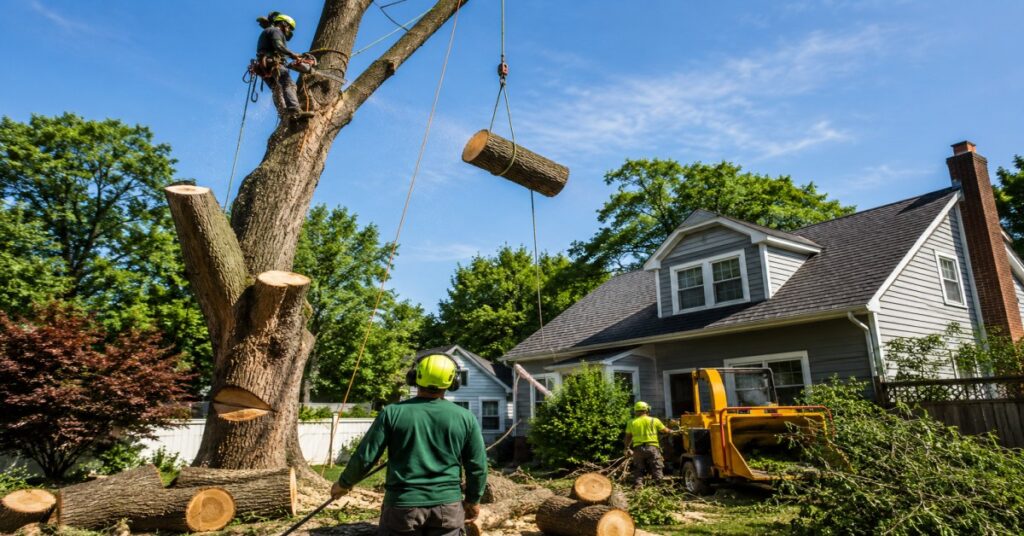
The professional tree removal process is a structured, step-by-step safety operation executed by certified arborists that involves a site risk assessment, property protection setup, precision cutting (via straight felling or sectional dismantling), controlled limb sectioning, debris cleanup, and optional stump grinding. Across Buffalo and Western New York, this systematic approach ensures that structurally compromised, dead, or hazardous trees are dismantled and hauled away without causing damage to nearby homes, utility lines, or landscapes.
At Treemanny, our crews have completed hundreds of safe, professional tree removals for homeowners throughout Buffalo and the surrounding suburbs. Below, we provide a transparent, behind-the-scenes look at the technical stages of a professional tree removal process—and explain exactly why each phase remains non-negotiable for the protection of your home and yard.
Table of Contents
- 1. Why Understanding the Process Matters
- 2. Step 1: Site Inspection & Assessment
- 3. Step 2: Access Planning & Protection
- 4. Step 3: The Tree Removal Itself
- 5. Step 4: Limbing & Wood Handling
- 6. Step 5: Stump Options After Removal
- 7. Step 6: Cleanup & Final Walkthrough
- 8. What to Ask Your Tree Crew Before They Start
- 9. Frequently Asked Questions
- 10. Ready to Schedule Your Tree Removal?
Why Understanding the Process Matters
Tree removal requires much more than just cutting down a trunk and hauling away limbs. Consequently, a proper professional tree removal process demands trained arborists, heavy machinery, precise safety planning, and clean execution. Furthermore, homeowners who understand these moving parts tend to ask better questions, secure more accurate quotes, and achieve far happier results.
Whether you are dealing with a storm-damaged oak, a dead trunk near your garage, or a large maple blocking a renovation, the professional tree removal process follows a highly consistent structure. In addition, while specific technical mechanics vary based on the tree’s size and location, the foundational steps always remain the same.
Step 1: Site Inspection and Safety Assessment
Every professional tree removal process begins with a thorough, on-site inspection. Specifically, a trained arborist or crew leader actively walks your property boundary to evaluate:
- The tree’s size, species, and overall health
- Root structure and soil stability conditions
- Proximity to structures, fences, power lines, and other trees
- Any internal decay, disease, or pest damage that affects stability
- The safest direction and method for felling or dismantling
During this stage, the crew identifies hidden hazards—such as hollow trunks, root rot, or unstable leaning—that directly dictate the chosen rigging safety strategy. According to guidelines from the International Society of Arboriculture (ISA), a formal risk assessment represents a foundational requirement before any physical cutting work begins.
Therefore, if your property requires a safety evaluation before a major take-down, our specialized [tree inspection and removal service in Buffalo] covers this step perfectly.
Step 2: Access Planning and Property Protection
Before our teams make a single cut, the crew establishes how machinery and ground personnel will access the trunk. Simultaneously, we plan how to protect your landscaping throughout the job. Undoubtedly, this careful operational planning separates elite local experts from amateur contractors.
Key access and protection measures include:
- Laying protective ground mats or plywood to shield lawns from heavy equipment tires
- Marking clear drop zones and establishing secure safety perimeters
- Verifying underground utility lines before grinding or digging up root plates
- Positioning wood chippers, cranes, or bucket trucks for optimal debris handling
- Communicating directly with you about which specific areas to keep clear
Particularly in tight suburban lots across Buffalo—where houses sit close together and fences divide small spaces—this planning phase can take longer than the actual cutting. As a result, if a company skips this protection setup entirely, you should walk away immediately.
Step 3: The Tree Removal Itself
This core step is what most property owners picture. However, the actual cutting technique depends heavily on the data gathered during the initial inspection. Generally, crews utilize two primary methods during a professional tree removal process:
Straight Felling
Crews choose this method when an open yard offers clear drop zones with zero structural risk. First, the arborist makes precise face cuts—including a strategic notch on the fall side and a matching back cut—to guide the tree down safely. Consequently, this method functions faster and costs less.
Sectional Dismantling
Arborists deploy this technique in tight spaces, near houses, over fences, or when structural rot compromises the tree. Instead of dropping the entire trunk, the climber or bucket operator saws the canopy into controlled sections from the top down. Next, ground crews lower each piece with specialized ropes and rigging blocks. Naturally, this represents the mandatory standard for residential properties in Western New York, where buildings and neighbor boundaries sit close together.
Both methods require rigorous professional certifications and field training. Thus, if a contractor quotes a complex job and sends only one person with a standard chainsaw, treat it as a massive warning sign.
Step 4: Limbing, Sectioning, and Wood Handling
Once the main trunk rests safely on the ground, the ground crew immediately tackles the remaining structural material. As a vital phase of the professional tree removal process, this step includes removing all side branches (limbing), cutting massive logs into manageable rounds, and handling the wood according to your preferences.
Typically, local homeowners choose one of three common outcomes:
- Chipped on-site: The crew feeds branches into a commercial wood chipper, creating fresh mulch you can keep or request us to haul away.
- Hauled away entirely: Our loaders pack up every ounce of organic debris, leaving your landscape completely clear.
- Left as firewood: We can cut larger trunk rounds into custom firewood lengths for your woodpile, depending on initial project specifications.
Hence, make sure you discuss wood handling choices before work begins. By doing so, you eliminate unexpected surprises regarding your final invoice.
Step 5: Stump Options After Removal
After our crew removes the primary trunk and branches, a raw stump will remain in the ground. At this point, your next step depends on your landscaping goals. Crucially, choosing the right finish remains an important final phase of the overall professional tree removal process.
You can choose between two main strategies:
- Stump grinding: Technicians use a high-powered wheel grinder to shave the wood several inches below your topsoil. Subsequently, they pack the remaining hole with fresh organic mulch. For this reason, it remains the most popular option in Buffalo.
- Full stump extraction: Heavy excavators pull the entire root ball out of the earth. Because this requires massive machinery, crews reserve it for major construction or replanting plans.
Basic quotes do not automatically bundle stump grinding. Therefore, confirm this detail upfront. Our dedicated crew provides [stump removal and grinding services in Buffalo, NY] either as a standalone project or wrapped into your primary package.
Step 6: Site Cleanup and Final Walkthrough
A premium tree service company never packs up until your yard closely matches its original condition. To finalize the professional tree removal process, our cleanup routine includes:
- Raking away scattered wood chips, fine sawdust, and bark fragments
- Power-blowing driveways, sidewalks, patios, and decks clean
- Packing up heavy protection mats, rigging ropes, and safety cones
- Conducting an on-site walkthrough with you to verify complete satisfaction
Without a doubt, thorough cleanup is a non-negotiable trait of professional operations. Conversely, if you have ever dealt with a cheap crew that left a mountain of mess behind, you already appreciate the elite value of a spotless finish. At Treemanny, we do not consider the professional tree removal process complete until you do.
What to Ask Your Tree Crew Before They Start
Even when you partner with an established company, asking a few strategic questions helps protect your property and ensures a smooth professional tree removal process:
- Are you fully licensed and insured specifically for tree work in New York State?
- Do you include stump grinding in this quote, or do you price it separately?
- What specific steps will you take to protect my lawn, garden, and perimeter fences?
- Does this price cover full debris hauling, or will you leave wood behind?
- Will the foreman complete a formal walkthrough with me before leaving?
Ultimately, an expert crew will answer these queries with total transparency. Moreover, if you need assistance identifying the right local partner, feel free to read our comprehensive guide: How to Choose the Best Tree Removal Service in Buffalo.
Straight Felling vs. Sectional Dismantling: Quick Comparison
| Factor | Straight Felling | Sectional Dismantling |
| Best For | Open yards with clear drop zones | Tight spaces, near structures or fences |
| Speed | Faster | Takes longer due to rigging |
| Cost | Generally lower | Higher due to equipment and labor |
| Equipment | Chainsaw, basic gear | Ropes, rigging, possibly a crane or bucket truck |
| Risk Level | Low in open areas | Requires high skill; safer in confined spaces |
Frequently Asked Questions
How do I know if a tree is dangerous after a storm?
Look closely for new leaning, hanging canopy branches, exposed or lifted roots, deep trunk cracks, bark stripping, and any hazardous positioning over structures or high-use areas. These represent the primary dangerous tree signs after storm events in Western New York that require professional evaluation.
Can a storm-damaged tree survive?
Sometimes, yes — but only a certified arborist can determine this safely. Minor canopy damage without structural trunk compromise can often be corrected with professional pruning and crown thinning. Major root plate damage, deep trunk splits, or significant recent leaning typically require full tree removal.
How fast should I act after noticing storm damage?
You should act within 24–48 hours if the tree is near a structure or high-traffic area. Contact emergency professionals immediately if branches are hanging directly over target areas, the tree is leaning toward power lines, or the root zone has actively shifted.
Does homeowners insurance cover storm-damaged tree removal?
Most standard policies cover removal when a tree falls on an insured structure like a house or garage. Coverage for hazardous-but-standing trees varies by provider. Document all dangerous tree signs after storm impacts thoroughly and call your insurer as soon as possible.
Who should I call for emergency tree removal in Buffalo?
Contact a licensed and insured company like Treemanny that specializes in rapid emergency response and has crews familiar with Western New York storm conditions. Learn more about choosing specialized tree removal services in Buffalo, NY.
Ready to Schedule Your Tree Removal in Buffalo, NY?
Now that you know what the professional tree removal process looks like from inspection to cleanup, you can schedule your removal with confidence. The next step is getting a no-obligation estimate from a crew that local homeowners have trusted across Western New York.
Treemanny is licensed, insured, locally operated, and committed to leaving your property cleaner than we found it — on every job, every time.
Treemanny serves Getzville, Amherst, Williamsville, Clarence, Lockport, East Amherst, and surrounding Buffalo, NY communities. Licensed and insured.