
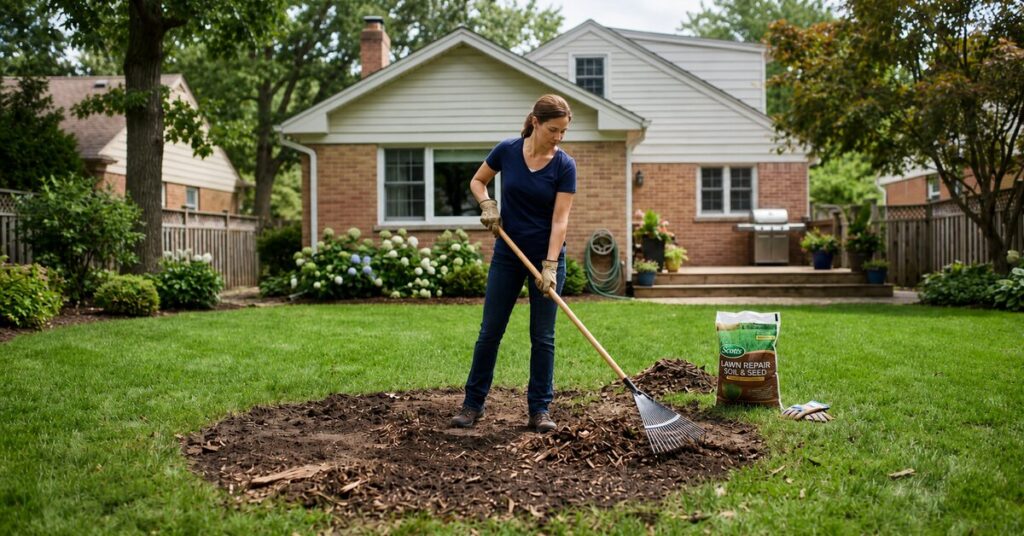
Yes, you absolutely can plant grass after stump grinding. But here’s the thing most homeowners in Buffalo, Amherst, and Cheektowaga learn the hard way: if you skip a few important steps between the grinding and the seeding, you’ll end up with patchy, struggling turf that never really takes hold. The good news is that with the right approach to soil prep, fill, and timing, that bare patch in your yard can look like the rest of your lawn within a single growing season.
This guide walks you through everything you need to know about how to plant grass after stump grinding — from clearing the debris and filling the hole correctly, to picking the right moment to throw down seed and get strong grass establishment. If you haven’t had your stump removed yet, start with our full overview of stump grinding and removal in Buffalo, NY, to understand what the process involves before aftercare begins.
What Stump Grinding Leaves Behind
Before you think about grass seed, it helps to understand what stump grinding actually does to your soil. A grinder chips the stump down several inches below the surface, leaving behind a mix of wood chips, sawdust, and loose, disturbed soil. That debris pile might look like usable fill, but it creates two real problems for bare patch repair and grass growth:
1. Nitrogen depletion. As wood chips and sawdust decompose, soil bacteria consume large amounts of nitrogen — the very nutrient grass needs most for healthy establishment. According to Penn State Extension, high carbon-to-nitrogen ratios in wood debris can tie up soil nitrogen for months, leaving new seedlings yellow and struggling. Seed sown directly into a chip-heavy area will sprout weakly and thin out quickly.
2. Soil settling. The ground beneath a removed stump is loose and airy. Over weeks and months, it compacts down, leaving a depression in your lawn that collects water, stays waterlogged, and makes mowing uneven.
If you want to plant grass after stump grinding successfully, both of these issues need to be addressed before a single seed goes down.
Step 1: Remove the Wood Chips and Debris
After grinding, rake out as much of the wood chip and sawdust mixture as you can. This material is not good topsoil — it will decompose unevenly, rob nitrogen from your loam soil, and cause the ground to sink. Remove it and either compost it elsewhere or dispose of it with yard waste.
Don’t feel like you need to remove every last wood fragment. Getting the bulk of it out — especially the top 4–6 inches — is what matters most for bare patch repair. Any deep fragments left behind will break down naturally over time without affecting surface grass growth.
Step 2: Fill the Hole Correctly
This is the step most people rush, and it’s where most lawn patches go wrong. The right fill makes all the difference between grass establishment that thrives and a sunken, struggling mess two seasons later.
What to use:
- Quality screened topsoil — fill the majority of the hole with a good loam soil or screened topsoil
- Compost — mix in a generous amount (roughly 20–30% of your fill) to restore organic matter, improve drainage, and support healthy microbial activity
- Avoid wood chips as fill — they break down into air pockets, cause soil settling, and deplete nitrogen
How to fill:
Add your topsoil and compost mix in layers, tamping each one lightly to eliminate air pockets. Overfill the area by an inch or two above grade — the soil will settle over time, and a slight mound is far easier to manage than a sunken depression that pools water every time it rains.
If the stump was large, be patient. A big hole may need to be topped up again after the first heavy rain as settling continues. This is completely normal and expected, especially in Western New York where spring rainfall is heavy.
Step 3: Soil Testing (Optional but Smart)
If the tree that was removed was diseased, or if the soil looks compacted and grey rather than dark and crumbly, a basic soil test is worth the small cost. Your local Cornell Cooperative Extension office serves Erie County homeowners and can provide an affordable soil test that tells you whether you’re dealing with a pH imbalance or a major nutrient deficiency — both of which will undermine grass establishment before it gets started. Amending based on actual soil test results is far more effective than guessing.
For most standard stump areas in Buffalo and surrounding suburbs, a pH of 6.0–7.0 is ideal for cool-season grasses. If your soil tests acidic, a light application of garden lime before seeding will help.
Step 4: Lawn Aeration (Recommended for Larger Areas)
If the stump area is wider than two feet across, light lawn aeration of the surrounding grass before you seed will significantly improve your results. Aerating the edges of the patch — not just the bare centre — helps new seed make contact with healthy loam soil underneath, improves water penetration, and encourages the existing grass to spread naturally into the repaired zone.
A simple hand aerator or core aerator rental from a local equipment hire in Buffalo, Amherst, or Cheektowaga works well for this. It takes 15 minutes and makes a noticeable difference in how evenly the repaired patch blends with the rest of the lawn.
Step 5: Timing When to Plant Grass After Stump Grinding
Timing is one of the most important factors for getting good germination and strong grass establishment. Seed sown at the wrong time of year simply won’t take hold, no matter how good your soil prep was.
Cool-season grasses (fescue, bluegrass, ryegrass — standard across Buffalo, Amherst, Cheektowaga, and the wider Western New York region):
- Best time: Late August through mid-October
- Second best: Early spring (March–April), though fall establishment is consistently stronger
Warm-season grasses (Bermuda, zoysia, St. Augustine — common in southern states):
- Best time: Late spring through early summer, once soil temps are consistently above 65°F
For homeowners across Buffalo and Western New York, fall seeding is the gold standard. Cooler temperatures reduce moisture stress on new seedlings, fall rainfall supports consistent germination, and the cool nights encourage deep root development before winter. Midsummer seeding in our climate almost always struggles — the heat dries out bare soil faster than seedlings can establish.
If you’re not sure whether your timing is right, our team at Tree Manny — Stump Removal Buffalo NY can advise on next steps after a grind and connect you with trusted local lawn care professionals.
Step 6: Seeding and Germination
Once your fill has settled and your timing is right, you’re ready to plant grass after stump grinding.
How to seed the patch:
- Loosen the top half-inch of your filled area lightly with a rake to create a fine, crumbly seedbed
- Choose a grass seed variety that matches your existing lawn — mismatched types create obvious bare patch repair lines that never blend
- Sow seed at the rate on the bag, erring toward the higher end for a bare area
- Rake the seed in lightly to ensure good soil contact — seeds sitting on top dry out and won’t germinate reliably
- Apply a thin layer of straw or seed-starting mulch to retain moisture and protect against birds
- Water gently but consistently — the top inch of loam soil should stay moist until germination (typically 7–21 days depending on variety and temperature)
Avoid walking on the newly seeded area until grass reaches mowing height. New seedlings are fragile and soil compaction at this stage will set grass establishment back by weeks.
Step 7: First Mow and Ongoing Care
Don’t mow your repaired patch until it reaches about 3–4 inches tall — roughly the height you’d normally mow your existing lawn. Cutting too early stresses new plants before their root systems are properly anchored.
For the first full growing season, give this area a little extra attention:
- Water deeply during dry spells rather than light daily watering — deep, infrequent watering encourages roots to go down rather than spread shallow
- Apply a starter fertilizer at seeding time, and follow up with a balanced slow-release fertilizer once the grass is established
- Overseed any thin spots the following fall — one round of overseeding is often all it takes to achieve a seamless finish
- If the area stays patchy despite good care, check for soil compaction and consider a light lawn aeration before the next overseeding
What About Planting a Tree Instead?
Some homeowners decide that rather than reseeding with grass, they’d like to replant the spot with a new tree. That’s a completely valid choice, but there are a few important things to keep in mind. The old root system will continue to decay underground, and the soil in that area will remain unstable and nutrient-variable for at least one to two years. If you plant too soon, new roots have a harder time establishing in disturbed, settling ground.
If you’re considering a replacement planting, check out our guide on choosing replacement trees after removal for advice on species selection, root spacing, and the right waiting period after a grind. We cover the best shade trees, ornamental trees, and native species suited to the Buffalo, Amherst, and Cheektowaga climate.
Common Mistakes to Avoid
- Seeding directly into wood chips — the chips deplete nitrogen and cause poor bare patch repair and uneven germination
- Skipping the fill overfill — you’ll end up with a sunken depression after the first rain and compacted, waterlogged soil
- Planting at the wrong time of year — midsummer seeding in Buffalo almost always fails due to heat and dry soil conditions
- Skipping lawn aeration on larger patches — aeration around the edges dramatically improves how well the repaired area integrates with the surrounding lawn
- Using the wrong grass variety — your repaired patch will look visibly different from the surrounding turf all season
- Watering too infrequently — bare loam soil dries out fast, and germinating seedlings need consistent moisture to establish
Final thoughts
Planting grass after stump grinding is straightforward when you give the soil the attention it deserves. Clear the wood debris, fill with quality topsoil and compost, let the area settle, consider lawn aeration for larger patches, time your seeding to the fall window, and keep moisture consistent through germination. Follow these steps and that bare patch will be invisible by next season — whether you’re in Buffalo, Amherst, Cheektowaga, or anywhere across Western New York.
If you’ve recently had a stump ground and want professional guidance on aftercare, contact our stump removal team in Buffalo, NY.
FAQ
How long after stump grinding can I plant grass?
You can plant grass after stump grinding as soon as the hole is properly filled and the soil is ready, typically within a few days to a week after the grind. The bigger timing factor is the season, not the days since grinding. For Buffalo, NY, homeowners with cool-season grasses, aim for late August through mid-October for the best grass establishment results.
Do I need to remove all the wood chips before seeding?
You don’t need to remove every last fragment, but you should clear out the bulk of the wood chips and sawdust, especially the top 4–6 inches. Leaving large amounts of wood material in the soil will deplete nitrogen, cause soil settling, and make it very hard to achieve healthy bare patch repair and grass establishment.
Can I use stump grinding chips as fill dirt?
No, this is one of the most common mistakes homeowners make. Wood chip debris from grinding looks like usable fill, but it decomposes into air pockets, sinks over time, and robs the surrounding loam soil of nitrogen. Always fill with quality screened topsoil mixed with compost instead.
Why does the soil sink after stump grinding?
Soil sinks after stump grinding because the ground is heavily disturbed during the process, leaving loose, airy material where the stump and roots once were. As that material compacts and the remaining organic matter decomposes, the surface drops. This is why overfilling by an inch or two above grade is so important; it accounts for the natural settling that follows, particularly through a Buffalo winter and spring thaw cycle.
What type of grass seed should I use after stump removal?
Always match your seed to the existing lawn variety as closely as possible. Across Buffalo, Amherst, Cheektowaga, and Western New York, that typically means a cool-season blend of tall fescue, Kentucky bluegrass, or a fescue/ryegrass mix is the most common. Using a mismatched seed will result in a visible patch that never fully blends with the surrounding lawn, even after full grass establishment.
Should I aerate the lawn before reseeding after stump grinding?
For smaller patches under two feet wide, basic soil prep is enough. For larger bare areas, light lawn aeration of the patch edges significantly improves how well the new seed integrates with the surrounding turf. It improves seed-to-soil contact, water infiltration, and encourages existing grass to spread naturally into the repaired zone.
Will the old roots affect my new grass?
In most cases, no. The remaining roots will slowly decompose underground without causing surface problems for grass. However, if the tree is very large, minor soil settling can continue for a season or two as deeper roots break down. Topping up with fresh loam soil and overseeding thin spots in year one or two is all it takes.