
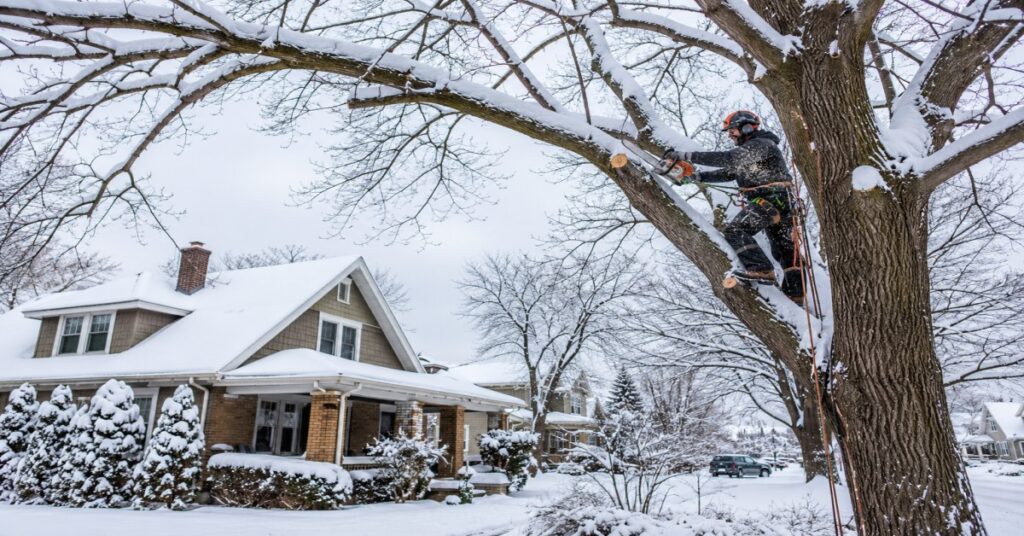
If you’re a homeowner in Buffalo, NY, you’ve probably wondered whether winter tree trimming in Buffalo NY is worth your time. For instance, you might worry that cold temperatures make it too risky for your property’s landscape. Fortunately, the short answer is a resounding yes. Winter is actually one of the absolute best times to trim most trees across Western New York. However, the long answer depends on your specific tree species, the work required, and Buffalo’s unique climate.
At Treemanny, our certified arborists work year-round across Buffalo and surrounding communities. Specifically, we serve Getzville, Cheektowaga, Amherst, Tonawanda, and Williamsville. Therefore, this comprehensive guide covers everything you need to know about professional winter tree trimming in Buffalo NY. Read on to learn when it pays off most and how it ultimately safeguards your home against severe lake-effect weather.
Table of Contents
- Why Winter Is a Smart Time for Tree Trimming in Buffalo
- What Happens to Trees in Winter — The Science Behind Dormancy
- Which Trees Benefit Most from Winter Trimming
- Winter Trimming vs. Spring and Fall Trimming: A Comparison
- Signs Your Buffalo Trees Need Trimming Before Spring
- What Treemanny Does During a Winter Tree Trim
- Frequently Asked Questions
- Schedule Winter Tree Trimming in Buffalo NY
Why Winter Is a Smart Time for Tree Trimming in Buffalo
Most property owners assume that spring or fall is the only right window for tree care. However, certified arborists consistently recommend late fall through early spring for major structural alterations. For Western New York, this specifically means December through February.
When you book winter tree trimming in Buffalo NY, your property gains several distinct biological and operational advantages:
- Complete Tree Dormancy: First, trees experience far less physiological shock when you remove branches while growth cycles are asleep.
- Arrested Pathogen Activity: Second, cold weather deactivates disease-spreading insects like emerald ash borers and oak wilt fungi. Consequently, freezing temperatures eliminate the risk of spreading these pests.
- Unparalleled Canopy Visibility: Third, bare branches allow arborists to clearly see the entire skeletal structure. As a result, we can effortlessly identify hidden cracks, crossing limbs, and structural defects.
- Lawn and Landscape Protection: Finally, heavy snow and frozen ground support commercial rigging gear and heavy machinery. Therefore, our equipment will not leave ruts in your soft springtime turf.
Buffalo winters bring sudden, exceptionally heavy lake-effect snowfall and ice accumulation. Because of this, professional winter tree trimming in Buffalo NY removes weak or overloaded branches before they snap. Ultimately, this proactive care protects your roof, fences, vehicles, and utility lines from costly storm damage.
What Happens to Trees in Winter — The Science Behind Dormancy
When seasonal temperatures plunge across Western New York, deciduous trees enter a protective biological state known as dormancy. Much like animal hibernation, dormancy is a survival strategy. First, the tree drastically slows its internal metabolic processes. Next, it draws vital nutrients back down into its deep root system and completely halts active growth.
This natural resting state is precisely why you should schedule winter tree trimming in Buffalo NY. Because the vascular system is at rest, the tree does not bleed sap at the wound site. Furthermore, the tree stages essential healing chemicals near the cambium layer. This is the active growing tissue just beneath the bark. Thanks to this biology, the immediate risk of fungal or bacterial infection drops to zero.
According to the International Society of Arboriculture (ISA), pruning during the late dormant season produces the best results. Cutting right before spring growth begins ensures fast wound closure. Additionally, it triggers a vigorous flush of healthy new leaves. Thus, Buffalo’s late winter window provides the ultimate environmental conditions for this proactive approach.
Which Trees Benefit Most from Winter Trimming
Not every tree species responds to cold-weather pruning in the exact same manner. For example, our local urban canopy contains a diverse mixture of native hardwoods, delicate ornamentals, and fruit trees. Knowing which specimens require immediate dormant care is where certified expertise becomes essential.
Great Candidates for Winter Trimming
- Oak Trees (Quercus species): This is an absolute necessity. Performing winter tree trimming in Buffalo NY on Red, White, or Pin Oaks stops the spread of Oak Wilt. Sap beetles carry this lethal fungal pathogen, but they remain completely dormant in freezing weather. Therefore, winter pruning removes all transmission risks.
- Maple Trees (Acer species): Maples bleed heavy sap when you cut them during active spring cycles. However, pruning Sugar, Silver, or Norway maples between December and February minimizes sap loss. This timeline allows the tree to preserve vital carbohydrates. Meanwhile, thinning dense maples prevents heavy lake-effect snow from snapping brittle wood.
- Ash Trees (Fraxinus species): Emerald Ash Borer pressures remain active throughout Erie County. Consequently, winter is the ideal time to clear out dying limbs without attracting active pests.
- Elm Trees (Ulmus species): Similarly, you should prune American Elms during deep winter. This timeline ensures that elm bark beetles cannot exploit fresh pruning wounds to transmit devastating Dutch Elm Disease.
Trees to Approach with Caution in Winter
- Fruit Trees (Apple, Pear, Cherry): These trees do benefit from dormant trimming, but timing must be precise. Ideally, schedule them in very late winter or early spring right before bud break. This prevents sub-zero drying winds from damaging fresh cuts.
- Ornamental Flowering Species (Magnolia, Redbud, Dogwood): These varieties develop flower buds during the previous summer. Therefore, heavy winter tree trimming in Buffalo NY will remove those overwintering buds. As a result, you cut away your spring floral bloom. It is typically best to trim these varieties immediately after their spring flowers fade.
If you are uncertain about the tree species in your yard, we can help. Treemanny’s certified arborists will accurately identify every tree on your property. Then, we build a custom strategy during our free on-site safety assessment.
Winter Trimming vs. Spring and Fall Trimming: A Comparison
Use this comparison matrix to understand why winter tree trimming in Buffalo NY delivers superior long-term results:
| Management Factor | Winter Trimming (Dec–Feb) | Spring / Fall Trimming |
| Pathogen & Disease Risk | Extremely Low — Pests and fungal spores are entirely dormant. | Moderate to High — Open, wet wounds actively attract insects. |
| Tree Stress Levels | Minimal — The tree’s vascular and metabolic systems are asleep. | Moderate — Trimming cuts away active energy and leaf tissue. |
| Canopy Visibility | Excellent — Clear view of structural defects without leaf cover. | Obscured — Dense summer foliage hides interior cracks. |
| Wound Healing Profile | Slower initially, followed by rapid callus growth in early spring. | Immediate healing response, but competes with leaf growth. |
| Ground & Turf Impact | None — Frozen ground and snow shield lawns from heavy tires. | Variable — Soft spring or fall soils are highly prone to deep rutting. |
| Primary Operational Focus | Major structural restructuring, hazard mitigation, deadwooding. | Light aesthetic shaping, pruning fruit trees, post-bloom care. |
Signs Your Buffalo Trees Need Trimming Before Spring
Property owners do not need to wait for a severe storm to damage their property. Instead, look for these key structural indicators that your trees require immediate professional intervention before spring arrives:
- Dead or Hanging Branches: These limbs lose all structural integrity and cannot recover. Consequently, they present a persistent gravity threat to your home and family.
- Structure and Utility Encroachment: Branches directly scraping or growing toward roofs, siding, windows, or power lines.
- Crossing and Rubbing Limbs: Branches that actively rub against each other. This friction grinds away protective bark and creates entry points for wood-rotting fungi.
- Severely Lopsided Crowns: Asymmetrical weight distribution leaves a tree highly susceptible to tipping. For instance, heavy regional ice loads can easily snap an unbalanced tree.
- Obvious Bark Decay: Deep fissures, peeling bark, heavy fungal growth, or extensive woodpecker drilling along major limbs.
Buffalo’s intense lake-effect snowstorms are remarkably heavy and unforgiving. Therefore, scheduling a proactive winter tree trimming in Buffalo NY appointment with Treemanny is an intelligent preventative measure. Protect your household assets today. To discover how we manage local canopies across every changing season, explore our comprehensive tree trimming and seasonal maintenance plans.
What Treemanny Does During a Winter Tree Trim
Our field-tested process for executing professional winter tree trimming in Buffalo NY strictly adheres to modern arborist best practices. Specifically, we follow rigorous ANSI A300 pruning protocols:
- Pre-Operational Safety Assessment: First, our team carefully evaluates the tree species. We note surrounding structural hazards and identify specific canopy liabilities before we begin.
- Meticulous Crown Cleaning: Next, we isolate and cleanly remove all dead, diseased, or broken wood. This eliminates dangerous falling debris hazards before heavy ice storms strike.
- Targeted Crown Thinning: Then, our arborists strategically prune selected interior branches. This reduces the tree’s wind resistance profile. As a result, an aerodynamic canopy allows severe winter winds to pass through harmlessly.
- Corrective Structural Pruning: Furthermore, we address codominant stems, which are competing trunks with weak, V-shaped attachments. Correcting poor branch angles prevents long-term splitting failures under stress.
- Flawless Branch Collar Cuts: Every pruning cut is precisely executed just outside the branch bark ridge and branch collar. We never perform flush cuts or leave decaying stubs, ensuring clean healing in the spring.
- Low-Impact Site Cleanup: Finally, we safely rig branches down over the frozen ground to prevent yard disruption. Our crew processes all remaining brush through commercial chippers and hauls it away cleanly.
Every active Treemanny crew is fully licensed and comprehensively insured. Moreover, we train extensively in structural arboriculture to provide peerless protection for your Western New York property.
Frequently Asked Questions
Is winter tree trimming safe for Buffalo trees?
Yes, it is highly recommended. Most native hardwoods remain fully dormant from December through February. Executing pruning cycles within this specific cold-weather window minimizes tree stress. Furthermore, it reduces sap loss and completely eliminates the risk of introducing active seasonal diseases.
What trees should NOT be trimmed in winter?
In general, avoid heavy structural pruning on spring-blooming ornamental trees like Magnolias, Dogwoods, or Eastern Redbuds during mid-winter. Otherwise, you will cut away the overwintering flower buds and ruin your spring bloom. Instead, prune these varieties immediately after their spring flowers fade.
Does heavy snow on branches mean I should delay my trimming?
Our crews can work through light, normal snowfall safely. However, branches may already be bending, cracking, or failing due to intense ice accumulation. Because this represents an immediate property hazard, you should contact Treemanny right away to deploy emergency mitigation measures.
How much does winter tree trimming cost in Buffalo, NY?
Total pricing depends heavily on the height of the tree, its structural complexity, and its proximity to buildings or power lines. However, because winter falls outside the frantic peak landscaping season, pricing is highly competitive. Booking schedules are also significantly more flexible. Therefore, contact Treemanny for a detailed, transparent on-site estimate.
Will trimming a tree in winter negatively impact its spring growth?
Not at all. In fact, it does the exact opposite. Properly executed dormant trimming preserves the tree’s stored energy reserves within its root system. When the ground thaws, the tree directs that energy exclusively into the remaining healthy branches. Consequently, this results in incredibly vigorous, structured, and resilient springtime development.
Schedule Winter Tree Trimming in Buffalo, NY — Call Treemanny Today
If the trees across your yard require expert structural modification, deadwood removal, or a safety check, do not wait until spring. Regional booking schedules peak quickly in warmer months. Therefore, investing in professional **winter tree trimming in Buffalo, NY** is highly efficient, biologically optimal for your canopy, and exceptionally reliable during the off-peak winter season.
Treemanny proudly serves homeowners and commercial properties across Buffalo, Getzville, Cheektowaga, Amherst, Tonawanda, and Williamsville. We are fully equipped to handle projects of any scale. Furthermore, we provide transparent, itemized structural estimates with absolutely no obligation.
Use the direct Call button on our official Google Business Profile to connect with an arborist instantly—or visit treemanny.com today to secure your winter service slot. To keep your canopy structurally resilient through every month of the year, make sure to explore our customized tree trimming and seasonal maintenance plans for year-round property peace of mind.