
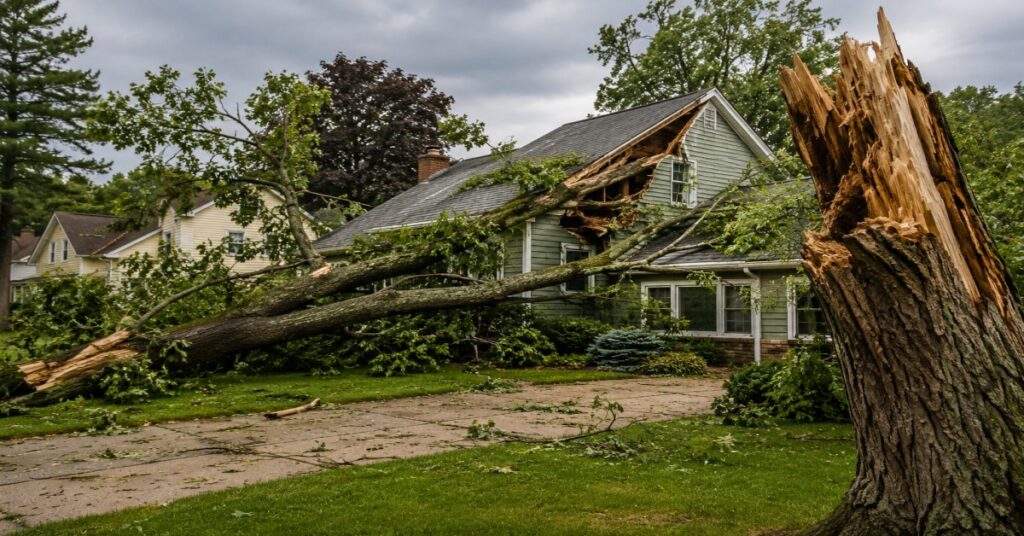
Buffalo storms do not give much warning. One night of high winds, heavy lake-effect snow, or a severe ice storm can bring down major branches, split trunks, or uproot massive trees that have stood for decades. When the storm clears, and you step outside to assess the property damage, having this emergency tree removal checklist Buffalo homeowners trust matters both for your immediate safety and for getting the right help quickly.
This comprehensive guide walks you through exactly what to do after a storm hits your property, step by step, so nothing gets missed and no one gets hurt.
🚨 Need Immediate Emergency Tree Removal in Buffalo?
Don’t wait for a compromised tree to cause more damage to your family or property. Our local emergency crews are standing by across Western New York for rapid deployment. Click to call Treemanny now for a 24/7 immediate response.
Step 1: Emergency Tree Removal Safety Guidelines — Clear the Area
The first rule on any emergency tree removal checklist Buffalo property owners follow is the most critical: stay back. Before you approach any downed, cracked, or leaning tree, check the surrounding area for these immediate hazards:
- Downed power lines: If a fallen tree or broken branch has made contact with an electrical line, treat it as live, active, and highly dangerous. Stay at least 30 feet away and call 800-589-3101 (National Grid Buffalo) immediately before taking any other steps.
- Structural damage to your home: If a heavy tree has fallen onto your roof, garage, or porch, do not enter the structure. Structural shifts can happen hours after the initial impact.
- Hanging limbs: Large broken branches suspended high in the canopy are called “widow makers” for a reason. Do not walk beneath them, as wind gusts can cause them to drop without warning.
- Root heave: If a large tree has partially uprooted and is leaning, the root plate is under massive physical tension. It can shift or completely tip over unexpectedly.
No amount of yard cleanup is worth a serious injury. If you notice any of these threats while going through your emergency tree removal checklist Buffalo, stop immediately and wait for a professional arborist assessment.
Step 2: Document the Damage Before You Move Anything
Once you have confirmed it is completely safe to move around your yard, document the situation before any cleanup begins. This is a crucial phase of the emergency tree removal checklist Buffalo homeowners use to streamline future property repairs.
- Take photos and video from multiple angles: Capture wide shots showing the tree’s full position relative to your home, fence, driveway, or power lines.
- Photograph close-ups of contact points: Show exactly where branches or trunks are resting on structures or blocking vital access points.
- Note the size and scope: Take a quick note of the approximate size of the tree trunk and the direction of the fall.
Pro Tip for Faster Service: Take clear photos of the tree damage from a safe distance and text them directly to our local team at (716) 466-5990. This allows our arborists to provide a lightning-fast hazard assessment and dispatch the right equipment immediately.
Step 3: Identify the Type of Damage You Have
Not all storm damage calls for the exact same response or equipment. A core part of using an emergency tree removal checklist Buffalo is identifying what structural failure you are actually dealing with:
- Complete tree fall: The entire tree has come completely down. This is the highest priority scenario if the tree is actively resting on your home, vehicle, or blocking a main driveway.
- Split trunk or co-dominant stem failure: The tree has split down the middle at a main fork. The remaining half may still be standing, but it is now structurally compromised and poses an ongoing drop risk.
- Large branch failure: One or more major limbs have snapped. Depending on the size and location, this requires urgent trimming to safely remove the hanging portion still trapped in the canopy.
- Leaning tree: The tree has shifted from its original upright position, often due to root zone saturation from heavy rainfall or soil erosion. A tree that begins leaning suddenly after a storm is an immediate safety hazard.
- Ice or snow loading: Buffalo lake-effect winters create unique ice and heavy snow accumulation. This weight bends and cracks branches gradually rather than in one dramatic wind snap. Check your entire canopy after winter weather.
Step 4: Call a Professional Emergency Tree Removal Service in Buffalo
We say this clearly because it impacts your safety: storm-damaged trees are not safe for DIY projects. A tree that has partially fallen, twisted, or split is under unpredictable structural tension. Cutting into a tensioned trunk incorrectly can cause it to violently spring back, roll, or drop in ways that even experienced individuals cannot anticipate without specialized rigging equipment.
Using this emergency tree removal checklist Buffalo reminds you to leave the chainsaws to trained experts. Treemanny’s emergency tree removal service is built for exactly these high-hazard situations. Our local crews are thoroughly trained in advanced rigging techniques, tension assessment, and controlled tree removal in tight, residential spaces.
For guidance on how to choose the best tree removal service in Buffalo, including what to look for in an emergency crew, our complete guide covers insurance verification, equipment, response time, and what questions to ask before anyone picks up a chainsaw.
📩 Send an Instant Message & Request a Callback
If you prefer to skip the phone call or need to send us a message with your property details, you can use our online message system to get an expert on your case fast.
Step 5: Contact Your Insurance Provider
After you have documented the damage and contacted a professional tree crew, get in touch with your homeowner’s insurance provider. While policies vary significantly, most standard homeowner’s insurance policies provide coverage for emergency tree removal services if the tree has fallen due to a covered storm event and caused direct damage to a covered structure, such as your primary home, detached garage, or property fence line.
When you call your insurance agent, have these details ready from your emergency tree removal checklist Buffalo notes:
- The comprehensive photos and videos you took during Step 2.
- The tree’s approximate size and whether it struck any insured structures.
- Whether the fallen material is actively blocking a driveway or a handicap accessibility ramp.
- The name and contact information of the professional tree service company you have called to handle the mitigation.
Note: Insurance coverage for tree removal where no structure was damaged (i.e., a tree simply falling into an open lawn space) varies widely by policy and carrier. Your specific insurance agent can clarify your exact out-of-pocket coverage limits.
Step 6: Clear Safe Access for the Crew
When the specialized emergency tree crew arrives at your home, they will need clear, immediate access to the work area to set up cranes, dump trucks, or wood chippers. You can keep the process moving efficiently by completing these tasks while you wait:
- Move all personal vehicles out of the driveway and away from the street curb near the tree.
- Unlock any side gates or backyard entry points.
- Move outdoor patio furniture, children’s toys, or loose planters completely away from the designated drop zone.
- Keep all children and household pets safely inside the home.
Completing this part of the emergency tree removal checklist Buffalo reduces structural setup delays, allowing the tree crew to secure the hazard immediately upon arrival.
Step 7: Ask About the Stump
Once the emergency hazard mitigation is complete, you will likely have a tree stump remaining at ground level. Emergency storm removal crews focus primarily on clearing the immediate fallen hazards and securing the safety of the property.
Stump grinding is typically treated as a separate, non-emergency service scheduled after the initial storm chaos has settled. Before the crew leaves your property, ask about scheduling a follow-up stump removal so you are not left with a permanent tripping hazard or lawn eyesore.
Buffalo-Specific Storm Conditions to Know
Understanding how regional weather affects local tree health can help you prevent emergency failures before the next storm hits:
| Buffalo Weather Peril | Impact on Local Trees | Preventive Action |
| Lake-Effect Snowstorms | Loads branches with incredibly heavy, wet snow that snaps healthy limbs. | Structural pruning to remove weak crotches. |
| Spring Ice Storms | Coats branches in ice, multiplying the effective weight on the canopy by 30x. | Deadwood removal to reduce brittle surface area. |
| Late-Summer Derechos | Winds exceeding 70 mph that easily tip mature trees with saturated root zones. | Canopy thinning to reduce wind resistance (“sail effect”). |
| Freeze-Thaw Cycles | Repeated freezing shifts clay-heavy Western New York soils, weakening root anchorage. | Yearly root-zone health evaluations by an arborist. |
Following a seasonal maintenance routine before storm season hits reduces your total property risk. Trees that are regularly pruned shed high winds more efficiently and carry less dead weight.
When to Call Treemanny for Emergency Tree Removal in Buffalo
Review your property against this emergency tree removal checklist Buffalo summary. Contact us immediately if any of the following apply after a storm:
- A tree or heavy limb is actively resting on your home, garage, or fence line.
- A tree has fallen completely across your driveway, blocking vehicles from entering or exiting.
- A tree is touching a utility power line (remember to notify National Grid first!).
- A cracked, fractured limb is hanging precariously over a walkway, patio, or living area.
- A mature tree is leaning noticeably at the root flare when it was completely upright before the storm.
Treemanny serves Buffalo, Amherst, Williamsville, Getzville, Clarence, Lockport, East Amherst, and the surrounding Western New York area. For emergency tree removal across the Buffalo cluster, including same-day service after major storms, call us directly or use the contact form on treemanny.com.
Frequently Asked Questions
Does homeowner’s insurance cover emergency tree removal in Buffalo?
In most instances, yes—provided the tree fell due to a covered weather event (like wind or ice) and struck an insured structure like your house or roof. If the tree falls onto an open lawn without hitting anything, debris removal coverage is often limited. Always document the damage before cleanup begins, and contact a professional team specializing in emergency tree removal services in Buffalo for storm damage and cleanup to help guide you through the process safely.
How fast can a professional tree crew respond after a Buffalo storm?
Response times vary based on overall storm severity and regional call volume. During major regional weather events, it is best to call as early as possible. Treemanny always prioritizes active emergencies where a tree is blocking property access or actively crushing a structure.
Is a leaning tree always considered a property emergency?
Not always, but a tree that suddenly shifts its angle during a high-wind storm or heavy rain should always be evaluated by a professional right away. A tree that has gradually leaned over decades is a maintenance item; a tree that leans suddenly after a storm is a structural failure waiting to happen.
What should I do if a storm knocks a tree onto my vehicle?
Take detailed photographs of the tree and the vehicle from multiple angles, then contact your comprehensive auto insurance provider. Vehicle damage caused by falling trees is typically handled through your auto policy rather than your standard homeowner’s insurance policy. Do not attempt to drive or move the vehicle until the weight of the tree is safely mitigated.
Treemanny is a fully licensed and insured tree service provider serving Buffalo and Western New York. For immediate assistance with our emergency tree removal checklist Buffalo protocols, storm cleanup, or standard tree removal services in Buffalo, NY — contact our local team today for an honest, transparent property assessment.